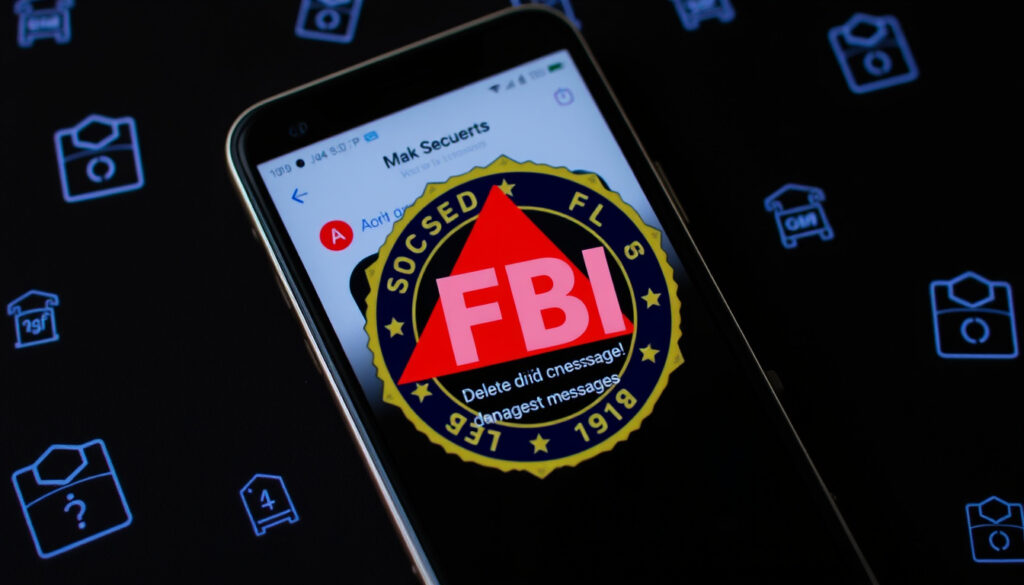
FBI Warning: Smartphone Users Must Delete These Texts
If you’ve received a text message about an unpaid toll that felt off, you’re not alone — the FBI wants you to delete it immediately after reissuing an urgent warning about a wave of “smishing” messages that impersonate toll agencies like E‑ZPass and demand payment through fake links. Here’s everything you need to know to recognize the scam, delete the texts, and protect your device.
Warning issued: June 23, 2025 · Scam type: Smishing (unpaid toll texts) · Affected platforms: iPhone, Android · FBI advisory year: 2024 (original) · Complaints reported: Over 10,000 in 2024
Quick snapshot
- FBI urges deletion of unpaid toll scam texts; smishing texts impersonate toll agencies; warning reissued June 2025 (HIPAA Times (healthcare compliance news))
- All smartphone users (iPhone, Android), especially those in states with electronic tolling and anyone receiving suspicious toll payment requests (TechRadar (tech security outlet))
- Do not open or reply; delete immediately; use ‘Report Junk’ on iPhone, long-press on Android (People (entertainment and news outlet))
- Forward to 7726 (SPAM), report to FTC at ftc.gov/complaint, file with FBI IC3 at ic3.gov (r/apple (community discussion))
Six facts about the FBI warning and the smishing campaign, one pattern: the scam relies on urgency and impersonation to trick recipients into handing over payment details.
| Fact | Detail |
|---|---|
| Date of latest warning | June 23, 2025 |
| Scam vector | SMS text (smishing) |
| Impersonated entity | Unpaid toll agencies (e.g., E‑ZPass) |
| Action advised by FBI | Delete without clicking or replying |
| Reporting channel recommended | FTC, FBI IC3, carrier spam reporting |
| Year of original advisory | 2024 |
Why is the FBI warning users to delete messages?
What type of scam is involved?
- The scam impersonates official toll agency notices – texts appear as urgent payment requests from “E‑ZPass,” “SunPass,” or state DMVs. According to the HIPAA Times (healthcare compliance news), the messages claim an unpaid toll and direct recipients to click a link to avoid escalating fees or penalties.
- Security researchers describe the infrastructure as “phishing-as-a-service,” with cloned state DMV pages and fake payment portals designed to steal credit card numbers and personal information. The same source reports that an estimated 60 million such messages are sent each month across the United States.
How does smishing work?
- Smishing (SMS phishing) uses text messages to trick users into sharing sensitive data. In this campaign, the scam often asks the recipient to reply with a letter such as “Y” to bypass link-blocking features on iPhones, then follows up with a malicious link. TechRadar (tech security outlet) warns that clicking can lead to credential theft or device compromise.
- Local authorities quoted in the coverage state that a real DMV or toll agency never contacts drivers by text to request payment or financial details. The combination of urgency and authority makes these smishing attempts especially convincing.
The scam exploits trust in government communications. With an estimated 60 million texts flooding phones each month (HIPAA Times), even cautious users may slip if they’ve recently driven on a toll road.
The implication: The FBI’s core message — delete without engaging — directly interrupts the scam’s success chain. The moment a user clicks or replies, the attacker gains a foothold.
What is the FBI warning today?
When was the latest warning issued?
- The FBI reissued its smishing warning on June 23, 2025, urging all smartphone users to delete scam texts immediately. TechRadar confirmed the renewed advisory, reflecting increased public complaints and new variations of the toll scam.
- The original advisory dates to 2024, when the scam first emerged. Since then, the volume has escalated dramatically — from scattered incidents to a nationwide wave affecting nearly all U.S. states.
What changed from the 2024 advisory?
- The 2025 warning adds specificity about the scam’s tactics: scammers now ask recipients to reply “Y” to bypass iPhone link protection, and they use more convincing logos and domain names. The HIPAA Times notes that the messages have appeared “across nearly all U.S. states,” indicating a shift from regional to national targeting.
Even with the renewed warning, many users won’t see the advisory until after they’ve clicked. The lag between scam launch and public alert gives fraudsters a narrow window of effectiveness.
The pattern: The FBI’s update signals that previous advice wasn’t enough — the scammers adapted, so the agency is doubling down on immediate deletion as the single best defense.
What is the FBI warning message?
What does the FBI advisory say?
- The FBI explicitly advises recipients to “delete all smishing texts immediately, do not click any links or reply, and report the incident to the FTC and the FBI’s Internet Crime Complaint Center (IC3).” TechRadar quotes the advisory as warning that these texts “aim to trick recipients into clicking malicious links and handing over credit card information.”
- The advisory also highlights that the messages often include generic greetings (e.g., “Dear Customer”), urgent language, and unusual links with misspellings.
How to decode the official language?
- The FBI’s warning is straightforward: “If you receive a suspicious text about an unpaid toll, do not click, do not reply, and delete the message.” The HIPAA Times summarizes the guidance as “delete scam texts immediately, report to authorities, and monitor financial accounts for unauthorized activity.”
What this means: The advisory deliberately avoids technical jargon — it’s written for the average smartphone user. No special software needed: just press delete and then report.
What are iPhone users on Reddit saying about the FBI warning to delete messages?
Top Reddit recommendations
- On the r/apple subreddit, users advise: “Delete and report junk. It gets deleted AND reported to Apple/carriers as spam or suspicious in one fell swoop.” The built-in iOS feature “Report Junk” simultaneously removes the message and sends metadata to Apple and the carrier for spam analysis.
- Another popular tip: long-press the message, tap “Delete and Report Junk,” and never open it. Reddit users (r/apple (community discussion)) emphasize that even opening the message can be risky if the phone renders links.
How iPhone users are handling the scam
- Many Redditors report receiving multiple toll scam texts in the same week, and they share screenshots of the fake “E‑ZPass” messages. The consensus is to treat every unexpected toll notice as a scam, especially if it comes from an unknown sender or contains a generic greeting.
- iPhone users also advise checking the sender’s email address or phone number — legitimate toll agencies use identifiable sender IDs, not random ten-digit numbers.
The trade-off: iPhone’s “Report Junk” is convenient, but it only works for iMessage texts sent from unknown senders. If the smishing message arrives via SMS (green bubble), the user must manually forward it to 7726.
What is smishing and how does it relate to the FBI warning?
Difference between smishing and phishing
- Smishing is phishing delivered via SMS (text message) instead of email. The TechRadar (tech security outlet) explains that while phishing uses email links, smishing exploits text messages — which many users trust more because SMS seems more personal and harder to block.
- The FBI warning specifically addresses unpaid toll smishing because the scam has reached critical mass: fake toll payment links are now the most common smishing variant reported to the IC3.
Why smishing is on the rise
- Smishing attacks are cheap, scalable, and harder to filter than email spam. Carriers block some suspicious texts, but many slip through because attackers rotate phone numbers and domains. HIPAA Times notes security researchers describe “phishing-as-a-service” platforms that offer prebuilt scam pages, making it easy for low‑skill criminals to launch campaigns.
Smishing is growing because it works. A text message feels immediate and official — and the FBI’s warning is the most authoritative attempt yet to reset that perception.
The pattern: The more smishing succeeds, the more it scales. The FBI’s emphasis on immediate deletion and reporting is meant to break that feedback loop.
Steps: How to delete smishing texts on iPhone and Android
- Do not open or preview the message. If you see a suspicious toll text, leave it unopened on both iPhone and Android.
- For iPhone (iOS 15 and later): Long-press the message bubble in the Messages app, then tap “Delete and Report Junk” (if the sender is unknown). This removes the message and sends a spam report to Apple and your carrier. If the “Report Junk” option doesn’t appear (common with SMS texts), swipe left on the message and tap “Delete,” then manually forward the message to 7726 (SPAM) as a separate text.
- For Android (Google Messages / Samsung Messages): Open the Messages app but do not open the suspicious text. Long-press the conversation thread with the scam text. Tap the block icon (⛔) and confirm “Block & Report Spam.” This prevents future messages from that number and reports the sender to Google or Samsung for spam analysis. Alternatively, forward the message to 7726 (SPAM) — this works on most Android carriers.
- If you already clicked a link: Do not enter any information. Close the browser page immediately. Run a security scan on your device (built‑in on Samsung and Google Pixel; third‑party on others). Contact your bank or credit card provider if you entered financial details. HIPAA Times advises filing a report with the FTC and the FBI’s IC3.
Why these steps matter: The first few seconds after receiving a smishing text determine whether the attack succeeds. Deleting and reporting immediately prevents further contact and helps carriers block the sender for other users.
Timeline: How the unpaid toll smishing scam evolved
2024 — FBI issues initial advisory on unpaid toll smishing scam. Early 2025 — Complaints surge; new variations appear, including the “reply Y” trick to bypass iPhone link blocking. June 23, 2025 — FBI renews warning, urges immediate deletion of smishing texts. Current — Scams continue nationwide; public advised to remain vigilant and report every incident. (TechRadar (tech security outlet))
Signal: The short gap between the original advisory and the 2025 renewal shows how quickly scammers iterate — what worked last year is now being refined, not abandoned.
Confirmed facts vs. what remains unclear
Confirmed facts
- FBI has issued a warning about unpaid toll smishing texts; these texts are fraudulent and should be deleted; users should not click links or reply; report to FTC and FBI IC3 (HIPAA Times (healthcare compliance news))
What remains unclear
- Total number of victims nationwide — while complaints exceed 10,000, the actual victim count is likely higher due to underreporting; how long the campaign will persist — smishing infrastructure is cheap to spin up, so the scam may continue for months; whether future FBI warnings will cover other smishing variants — the advisory is specific to unpaid tolls, but similar scams (fake package delivery, bank alerts) also exist; exact 2025 complaint count has not been released (FBI IC3)
The consequence: The gap between known complaints and actual victims underscores the need for widespread reporting to help authorities track the scam’s true scale.
What the experts are saying
The FBI recommends ‘smishing’ scam recipients to delete all questionable messages they receive.
— People (entertainment and news outlet) quoting the FBI advisory
The best way to deal with ‘smishing’ texts is to delete them and never click on a link from an unknown sender.
— TechRadar (tech security outlet)
It’s best to just ‘delete and report junk.’ It gets deleted AND reported to Apple/carriers as spam or suspicious in one fell swoop.
— Reddit user (r/apple community discussion)
The consequence: Trust in official text messages is eroding. For the FBI, the long‑term challenge is restoring the public’s ability to distinguish real agency notices from frauds — a task that starts with one deleted text at a time.
For more details on how to protect yourself, check out the FBIs smishing and QR scam warnings for additional safety tips.
Frequently Asked Questions
What is smishing?
Smishing is SMS phishing — fraudsters send text messages that appear to come from legitimate organizations (toll agencies, banks, delivery services) to trick recipients into clicking malicious links or sharing personal information.
How can I tell if a toll payment text is fake?
Fake toll texts usually have generic greetings (“Dear Customer”), urgent language (“Pay within 24 hours or your license will be suspended”), misspellings, and links that don’t match the official agency’s domain. Real toll agencies will never text you out of the blue to request payment.
Should I delete the message even if I haven’t clicked anything?
Yes. The FBI advises deleting the message immediately even if you haven’t interacted with it. Keeping the message on your phone risks accidentally tapping the link later or being tricked by follow‑up texts.
What should I do if I already clicked on a smishing link?
Close the page immediately. Do not enter any information. Run a security scan on your device, contact your bank if you shared financial details, and report the incident to the FTC and the FBI’s IC3.
Can I forward the suspicious text to authorities?
Yes. Forward the message to 7726 (SPAM) — this works on most carriers and helps them block the sender. You can also report the text at ftc.gov/complaint and file a complaint at ic3.gov.
Is there a difference between iPhone and Android smishing risks?
The risk is the same: both platforms receive SMS texts. However, iPhone users have the “Report Junk” feature for iMessage, while Android users can long‑press and block the sender. Both can forward to 7726.
Will the FBI warning affect my normal text messaging?
No. The warning only applies to unsolicited smishing texts. Your regular messaging with contacts remains unaffected. Follow the guidelines if you receive a suspicious message from an unknown sender.
Where can I find the official FBI press release?
The FBI publishes cybersecurity advisories on its website at ic3.gov. Local FBI field offices also issue regional alerts. You can also follow the FBI’s official social media channels for updates.
More related posts
 What Are Hip Dips? Causes, Fixes & Attractiveness Explained
 Machine Shop Near Me: Engine Rebuild, Cost & Turnaround Guide
 Eloise at the Plaza: Story, Suite, and Movie Guide
 Cleveland Cavaliers vs Miami Heat Timeline: Head-to-Head History
 Richard Branson Net Worth 2025: Still a Billionaire at $2.8B
 Watch Black Swan Online: Disney+, Netflix Status
 Signs of Low Blood Pressure: Symptoms, Causes & When to Act
 The Maze Runner Actors: Full Cast, Accidents, and Future Movies