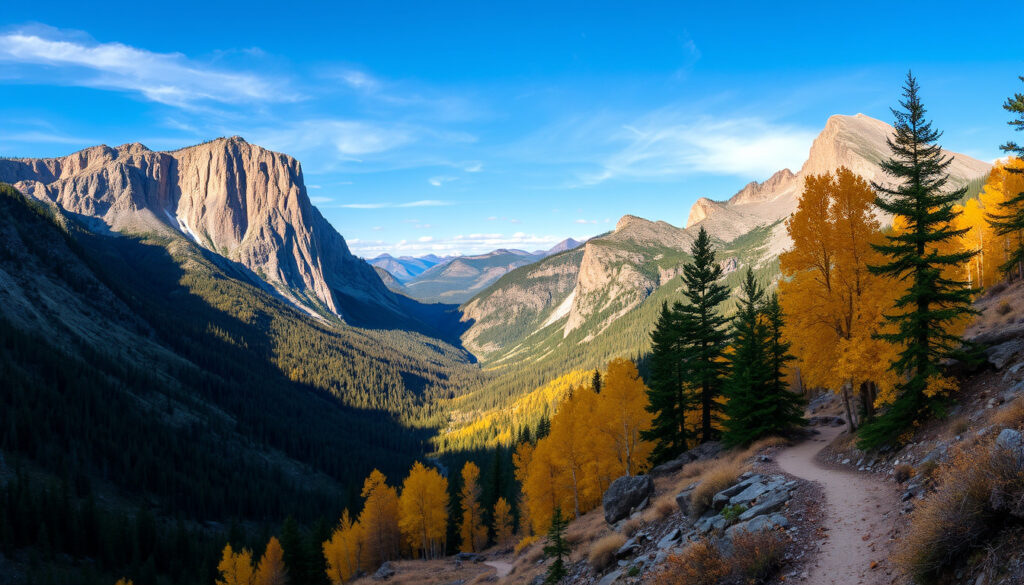
Things to Do in Colorado: Top Attractions, Best Time & Itinerary
There’s something about Colorado that makes you feel like you’ve stepped into a postcard — snow-capped peaks, red rock formations, and a craft beer on every corner. Whether you’re an outdoor enthusiast or a city explorer, this guide strips away the top-10 clichés and gives you a practical, week-long itinerary that balances altitude with altitude-sickness awareness.
Top tourist attraction: Rocky Mountain National Park (over 4.5 million annual visitors) ·
Best month to visit: September for mild weather and fewer crowds ·
Minimum days recommended: 7 days for a comprehensive trip ·
Highest paved road in North America: Mount Evans Scenic Byway (14,130 feet)
Quick snapshot
- Rocky Mountain National Park is the top attraction by visitor numbers (National Park Service)
- September is often cited as the best month for weather and crowds (Colorado.com)
- Ouray is called “Little Switzerland of America” (Colorado.com)
- Mesa Verde National Park has over 600 cliff dwellings (National Park Service)
- Exact number of celebrities with primary residence in Colorado is not officially tracked
- Best month varies significantly by activity (ski vs. hike vs. leaf peep)
- Exact snowpack and opening dates for Trail Ridge Road each year are unpredictable until spring
- Peak fall foliage timing can shift by a week or more each year
- Late May to mid-October: timed entry permits required for Rocky Mountain National Park (National Park Service)
- December to March: peak ski season across all major resorts (Colorado.com)
- September: best leaf watching and mild weather; less crowded than July–August (The Packable Life)
Four key facts that color every decision when planning a Colorado trip:
| Category | Detail |
|---|---|
| Capital city | Denver |
| Highest elevation (town) | Leadville at 10,152 ft |
| Number of 14ers (peaks over 14,000 ft) | 58 |
| State mammal | Rocky Mountain Bighorn Sheep |
What is the number one tourist attraction in Colorado?
Rocky Mountain National Park overview
With over 4.5 million annual visitors, Rocky Mountain National Park is the most-visited attraction in Colorado. The park spans 265,769 acres of alpine terrain, lakes, and forests, and draws hikers, wildlife watchers, and scenic drivers year-round.
Trail Ridge Road highlights
- Highest continuous paved road in the U.S. — 12,183 feet at its summit (National Park Service)
- Opens fully only in late May through October due to snow
- 48 miles of alpine tundra, elk, bighorn sheep, and panoramic views
Permit and reservation system
Timed entry permits are required from late May through mid-October. These can be booked up to 60 days in advance and are often gone within hours for popular dates. An additional park pass (per vehicle) is also required.
The implication: base your entire Colorado schedule around RMNP to secure permits and lodging.
What is the best month to visit Colorado?
There is no single perfect month because Colorado changes dramatically with the seasons. September is often cited as the best overall month for mild weather and fewer crowds, but the “best” depends entirely on what you want to do.
Weather comparison by month
- Summer (June–August): 70–85°F in Denver; afternoon thunderstorms in the mountains (Colorado.com)
- Fall (September–October): 50–70°F, clear skies, peak foliage in late September
- Winter (December–March): 20–40°F, heavy snow in mountains, excellent skiing
- Spring (April–May): 40–60°F, snow still at high elevations, quietest season
Peak vs. shoulder season pros and cons
- July–August: best for high-altitude hiking, but largest crowds and expensive lodging
- September: mild weather, fewer crowds, fall colors — the sweet spot
- March–April: snowiest months for skiing; spring skiing deals available
Monthly event highlights
- January: International Snow Sculpture Championships in Breckenridge
- May: Denver Arts Festival
- September: Telluride Film Festival, Great American Beer Festival
- December: Parade of Lights in Colorado Springs
If you want hiking and empty trails, aim for early June or late September. Skiers get the best snow in March, but the best apres-ski weather in February. The catch is you can’t optimize for both on the same trip.
The pattern: match your month to your main activity, not a calendar.
How many days in Colorado is enough?
Most visitors ask this because they’re trying to squeeze too much into too few days. Here is what realistic itineraries actually look like.
1–3 day itinerary options
- Land in Denver, explore downtown and Red Rocks Amphitheatre, then head to Boulder for the Flatirons (Boulder Convention & Visitors Bureau)
- Day-trip to Rocky Mountain National Park from Denver (round-trip 2.5 hours each way)
5–7 day road trip outline
- Day 1–2: Denver – museums, Union Station, breweries (Visit Denver)
- Day 3–4: Rocky Mountain National Park – hike, drive Trail Ridge Road, Estes Park
- Day 5: Drive to Ouray via Million Dollar Highway – one of America’s most scenic drives (Colorado.com)
- Day 6: Ouray hot springs, hiking, or jeep tours
- Day 7: Return to Denver via Colorado Springs – Garden of the Gods and Pikes Peak
10–14 day deep dive for locals
- Add the Western Slope: Grand Junction, Colorado National Monument, wine country
- Add Mesa Verde National Park and Durango for ancestral Pueblo history
The pattern is clear: 7 days is the minimum to experience both the mountains and the cities without rushing. Less than 5 days, and you’re mostly on the road.
What are the top five places to visit in Colorado?
Five locations that cover the state’s diversity — from alpine peaks to desert canyons to urban culture.
Rocky Mountain National Park
Over 355 miles of hiking trails, alpine lakes, and the iconic Trail Ridge Road. Requires timed entry in summer.
Garden of the Gods
Free public park in Colorado Springs with 300-foot sandstone rock formations. One of the most photographed spots in the state. (Garden of the Gods Visitor Center)
Mesa Verde National Park
UNESCO World Heritage Site preserving over 600 cliff dwellings of the ancestral Pueblo people. Occupied from A.D. 600 to 1300.
Denver Union Station area
Restored transit hub turned dining, shopping, and cultural district. Start your trip here for easy light-rail access to the mountains.
Ouray and the Million Dollar Highway
Known as “Little Switzerland of America” for its alpine scenery. The Ouray Hot Springs are a year-round draw, and US 550 south offers dramatic canyon views.
Why these five? They span three national park units, a free city park, and a mountain town — proving Colorado is more than just one landscape.
What are three things Colorado is known for?
Three pillars that anchor the state’s identity — and your trip planning.
Skiing and winter sports
Colorado has over 30 ski resorts, including Aspen, Vail, Breckenridge, and Steamboat Springs. The ski season runs December through April, with some resorts open into May. (Colorado.com)
Craft beer scene
More than 400 breweries statewide, among the highest per capita in the U.S. Denver alone has over 100 breweries. The Great American Beer Festival is held annually in Denver.
Outdoor recreation and national parks
Four national parks — Rocky Mountain, Mesa Verde, Great Sand Dunes, and Black Canyon of the Gunnison — plus 8 national monuments and 42 state parks. The variety is unmatched: from sand dunes to canyons to alpine tundra. (National Park Service)
The implication: You don’t have to ski to enjoy Colorado, but you should at least try a local IPA after a hike.
What town is called Little Switzerland in Colorado?
Ouray, a small town in the San Juan Mountains, has held the nickname “Little Switzerland of America” for decades. Its setting — box canyon surrounded by 13,000-foot peaks — is genuinely Alpine in character.
Ouray history and hot springs
- Founded as a mining town in the 1870s; historic district with Victorian architecture
- Ouray Hot Springs are open year-round, with natural mineral water between 99–106°F (Colorado.com)
Scenic drives near Ouray
- Million Dollar Highway (US 550) between Ouray and Silverton — famous for its steep cliffs and lack of guardrails
- Alpine Loop Back Country Byway — a 4WD route through ghost towns and high passes
Outdoor activities in the San Juan Mountains
- Summer: hiking, ice climbing at the Ouray Ice Park (the world’s first dedicated ice park)
- Winter: backcountry skiing, snowshoeing, and winter jeep tours
Ouray is not a theme park — it’s a real working town that happens to be spectacularly scenic. Budget at least two nights.
What is the 3 second rule in Colorado?
Colorado’s “3-second rule” refers to distracted driving law: you must wait three seconds after a stoplight turns green before using a handheld device. It’s part of a broader ban on handheld cellphone use while driving. (Colorado Department of Transportation)
Distracted driving law details
- Prohibits holding a cellphone while driving (for calls, texting, navigation)
- Applies to all drivers, no exceptions
- First offense: $75 fine; subsequent fines increase
Penalties and fines
- Fines start at $75 for first violation, plus court costs
- If the violation contributes to a crash, fines can exceed $1,000
How to comply with the law
- Use hands-free mode (Bluetooth or mount)
- Wait for a pull-off to use your device
- Navigation: set destination before driving
Why this matters: This law is strictly enforced in mountain towns and tourist corridors. Out-of-state plates are not exempt.
The catch: even a split-second distraction can cost you $75 or more — so go hands-free. The Alaska Permanent Fund Dividend is a great way to learn more about visiting Colorado.
Pros and Cons of visiting Colorado
Upsides
- Incredible natural diversity — four national parks, dunes, canyons, peaks
- Year-round outdoor activities: skiing, hiking, rafting, leaf peeping
- Vibrant cities with cultural attractions and craft breweries
- Relatively easy to plan a road trip loop
Downsides
- Altitude sickness is a real risk for visitors from low elevation
- Peak season crowds and high prices (July, August, ski season)
- Mountain weather is unpredictable; afternoon thunderstorms common in summer
- Many attractions require timed entry permits booked weeks in advance
The trade-off: you trade convenience for an unmatched variety of landscapes — plan ahead and it pays off.
How to plan your Colorado trip
Five concrete steps to avoid rookie mistakes.
- Choose your season — Match activities to the month you plan to visit (ski in winter, hike in summer, leaf peep in fall).
- Book permits early — Timed entry for Rocky Mountain National Park and some campgrounds open 60 days ahead.
- Acclimatize in Denver — Spend your first night at 5,280 feet before going higher.
- Rent a car — Public transit from Denver to mountain towns is limited; a car (ideally AWD) is essential.
- Plan for altitude — Drink water, avoid alcohol the first day, carry acetaminophen for headaches.
The pattern: advance planning is the single biggest factor in a smooth trip.
Looking for more travel inspiration? Check out our guide to Things to Do in Japan or the California Academy of Sciences – Essential Visitor Guide.
Timeline for your Colorado trip
- — Peak hiking season; book lodging 3–6 months ahead (Colorado.com)
- — Best foliage; permits still needed for RMNP
- — Ski season; chain laws may apply on mountain passes
- — Many mountain passes close until spring; check COtrip before driving
What this means: check current conditions on COtrip and book early to secure your preferred dates.
What we know and what’s unclear
Confirmed facts
- Rocky Mountain National Park is the top attraction by visitor numbers (National Park Service)
- September is often the best month for mild weather and fewer crowds (Colorado.com)
- Ouray is officially called “Little Switzerland of America” (Colorado.com)
- Mesa Verde has over 600 cliff dwellings and is a UNESCO World Heritage site (National Park Service)
- Great Sand Dunes has the tallest dunes in North America (National Park Service)
What’s uncertain
- Exact number of celebrities living in Colorado is not tracked
- Best month is highly activity-dependent — no single answer fits everyone
- Snowpack and opening dates for high passes vary year to year
- Total number of Colorado breweries changes frequently with openings and closings
- Annual visitor counts for some parks fluctuate due to weather and reservation systems
The pattern: rely on authoritative sources for confirmed facts, but stay flexible on elements like timing and snow.
What experts say
“Colorado is a state of extremes — from the urban energy of Denver to the quiet of the Great Sand Dunes. The key is to pick one region and explore it deeply rather than try to see everything in five days.”
— Colorado Tourism Office, as published on Colorado.com
“Timed entry permits help preserve the visitor experience at Rocky Mountain National Park. Without them, summer traffic would make the park unusable. Plan ahead, and you’ll have a world-class experience.”
— Park Ranger, Rocky Mountain National Park, via National Park Service
“Fall in Colorado is spectacular, but you have to be flexible. The peak colors can shift by a week depending on the monsoon season. Late September is your best bet, but always check local reports.”
— Travel writer, The Packable Life
For first-time visitors, the choice is clear: commit to a 7-day loop that gives you mountains, a city, and one unique stop like Ouray or Mesa Verde. Stretch it to 10 days if you want to add the Western Slope or the Sand Dunes. Anything less than 5 days means you’ll spend more time driving than experiencing.
Frequently asked questions
What is the cheapest time to visit Colorado?
April–May and October–November are the cheapest months. Lodging prices drop significantly, and crowds are minimal. Ski resorts are closed in spring, but hiking is possible at lower elevations.
Do I need a car to get around Colorado?
Yes, especially if you plan to explore mountain towns and national parks. Denver has a light-rail system, but it reaches only a few suburbs. For a road trip, a standard car with good tires works for summer; AWD is recommended for winter.
Is Colorado safe for solo travelers?
Colorado is generally very safe. Mountain towns are low-crime. Common sense applies: tell someone your hiking plans, carry bear spray in backcountry, and watch for altitude sickness. Highway driving at night in winter can be hazardous.
What is the altitude sickness risk?
Altitude symptoms (headache, nausea, fatigue) can affect anyone above 8,000 feet. Denver is 5,280 ft; many mountain towns are 8,000–10,000 ft. Acclimatize for 24 hours at Denver before heading higher. Stay hydrated and avoid heavy exertion the first day. (CDC travel guidance)
Are there any free attractions in Colorado?
Garden of the Gods is free to enter. The Denver Art Museum has free entry on select days. Many state parks charge a small entrance fee but offer free parking at trailheads. The Red Rocks Amphitheatre is free to visit when no show is happening.
What is the tipping etiquette in Colorado?
Standard U.S. tipping applies: 15–20% at restaurants, $1–2 per drink at bars, $2–5 per hotel stay for housekeeping. Tipping for tour guides is common (10–15% of tour cost).
What is the best way to get from Denver to the mountains?
Driving is the most flexible option: I-70 west to the mountains (45 minutes to the foothills, 1.5 hours to Summit County). There are also shuttle services like the Bustang ($10–20 one-way) and private shuttles to ski resorts.
Can I visit Colorado in winter without skiing?
Absolutely. Winter offers snowshoeing, ice climbing at Ouray, hot springs, holiday events, and lower rates. Many mountain towns have free snowshoe trails and scenic gondola rides.
The takeaway: these answers help you plan without surprises.
More related posts
 Katie Holmes Movies and TV Shows: Complete List
 ADP RUN Payroll Login: Step-by-Step Guide
 Vietnamese Restaurant Near Me: Best Dishes & Health Tips
 Galaxy S23 FE to Buy: Worth It in 2025? Price & Specs
 Room on the Broom: Book, Movie, Activities & Streaming Guide
 University of South Florida: Prestige, Rankings, Selectivity
 Dog Wash Near Me: Prices & Self-Service Locations in Ireland
 Zach Galifianakis Movies and TV Shows: Complete Filmography