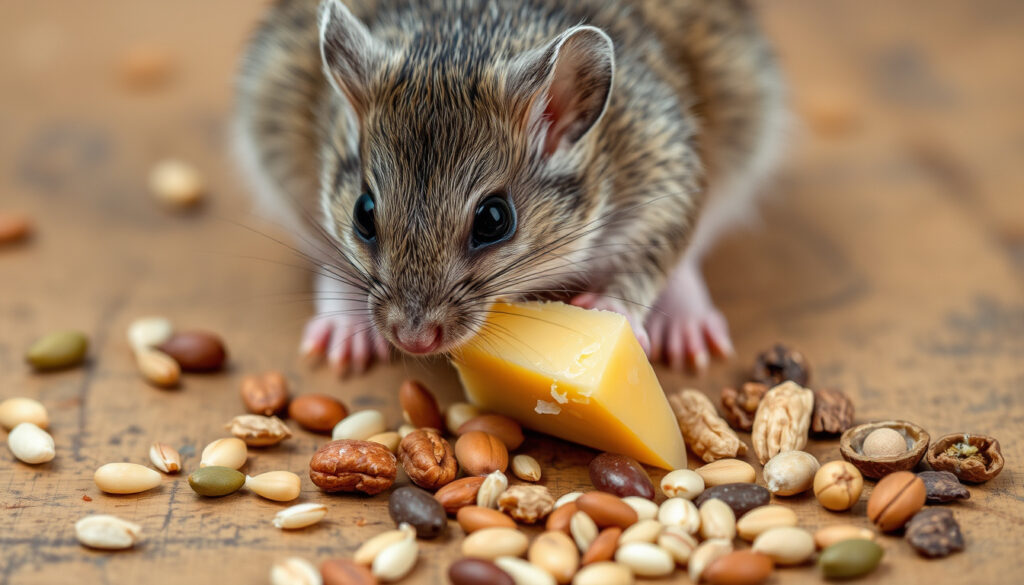
What Do Mice Eat? Complete Guide to Mouse Diet & Food Sources
Few sounds announce an uninvited guest as clearly as the rustle of a mouse in the kitchen. These tiny foragers are driven by one constant need: food, and understanding exactly what they eat is the key to both preventing an infestation and choosing the right bait – here’s what the evidence says.
Dietary preference: Grains, seeds, fruits, and vegetables ·
Common attractants: Cereal, pet food, bird seed, chocolate ·
Effective bait: Peanut butter and chocolate
Quick snapshot
- Mice are omnivores: grains, seeds, fruits, insects, and scraps (Catchmaster (pest control resource))
- Peanut butter is a top‑choice bait due to fat, protein, and sweetness (Mouse Blocker (rodent education site))
- Whether mice truly prefer cheese or if it is a cultural myth
- Exact percentage of diet from human food vs. natural sources in wild populations
- Whether house mice and field mice have significantly different diets
- In winter, mice shift from outdoor foraging to stored food, driving them indoors (South Shore IPM (pest management specialist))
- Effective control combines sanitation, exclusion, and bait placement no farther than 10 feet apart (Illinois Department of Public Health (state health authority))
Six key dietary facts that every homeowner and pest professional should know:
| Fact | Detail |
|---|---|
| Daily food intake | 3–4 grams per mouse |
| Preferred food type | Cereal grains and seeds |
| Water source | Free water or moisture from food |
| Attraction to sweets | High – chocolate, sugar, fruit |
| Omnivorous range | Plant material + invertebrates + small vertebrates |
| Survival without food | 2–4 days, but water is critical |
What do mice like most to eat?
Grains and seeds as top choices
- House mice strongly prefer grains like wheat, oats, and corn. According to the Illinois Department of Public Health (state health authority), they consume a wide range of cereal products, including breakfast cereals, rice, pasta, flour, and crackers.
- Pet food and bird seed are also magnets. The same source notes that pet food left out overnight is a frequent target (Catchmaster (pest control resource)).
Sugary and fatty leftovers
- Peanut butter is widely considered the gold standard of mouse baits because it combines fat, protein, and sweetness (Mouse Blocker (rodent education site)).
- Chocolate, candy, and fruit scraps also draw mice effectively. The Command Pest Control (pest prevention specialist) lists berries, apples, peaches, and pears as common lures.
If you are baiting a trap, skip the cheese cliché and reach for peanut butter or chocolate instead. These high‑calorie options align precisely with the mouse’s natural drive for energy‑dense food.
The implication: the most effective attractants are high‑calorie, aromatic, and already familiar from pantry raids. A peanut‑butter smear on a snap trap will almost always outperform a cube of cheese.
What do mice eat if there’s no food?
Cannibalism and gnawing on non‑food items
- When desperate, house mice will eat insects (including cockroaches and bedbug larvae), carrion, and even other mice (Colonial Pest Control (pest management specialists)).
- They gnaw through wood, plastic, and wiring to reach hidden food or water. The Illinois Department of Public Health (state health authority) confirms that gnawing is a core survival behavior.
Seeking water and alternative protein
- Water is more critical than food. A mouse can survive without food for 2–4 days but far less without water (South Shore IPM (pest management specialist)).
- In urban settings, they will scavenge meat scraps and greasy leftovers from garbage (Mouse Blocker (rodent education site)).
Eliminating food sources (even crumbs) forces mice to explore new areas, making sanitation a more powerful control method than poisons alone. A hungry mouse is a moving mouse.
What this means: when you remove all accessible food, mice will turn to structural gnawing and cannibalism. The trade‑off is that they may also seek water elsewhere, potentially spreading contamination across wider areas.
What is the main food of mice?
Cereal grains and processed carbohydrates
- The primary diet of house mice is cereal grains: barley, rice, wheat, and oats. The Illinois Department of Public Health (state health authority) notes that these make up the bulk of their intake in human‑occupied buildings.
- Processed carbohydrates such as pasta, bread, and baked goods are equally appealing (Catchmaster (pest control resource)).
Fruits and vegetables as secondary options
- Mice also eat fresh produce like apples, carrots, and berries. Mouse Blocker (rodent education site) lists them as supplementary foods.
- Outdoor gardens provide rotten fruit and compost that attract mice from up to 30 feet away (Catchmaster (pest control resource)).
The pattern: mice are carbohydrate‑specialists but opportunists. A grain‑based pantry is their ideal habitat, but they will eat most anything that provides energy.
What do mice eat in the wild?
Seeds, nuts, and berries
- Wild field mice (Apodemus sylvaticus) forage seeds, nuts, berries, and acorns. Colonial Pest Control (pest management specialists) reports that they also take maple seeds, corn, and pumpkins directly from gardens.
- Poke berries and other wild fruits are seasonal staples (Mouse Blocker (rodent education site)).
Insects and small vertebrates
- Wild mice are omnivores, consuming insects, snails, and occasionally small birds. South Shore IPM (pest management specialist) describes their diet as adapting to whatever is available seasonally.
- This insect‑eating behavior makes them important in some ecosystems, but a pest in structures.
The contrast: wild mice have more varied but less reliable food sources than their domestic cousins. This drives the seasonal push into homes when outdoor supplies dwindle.
What do mice eat in the house?
Pantry staples and packaged goods
- House mice raid pantries for cereal, pasta, crackers, sugar, and flour. The Illinois Department of Public Health (state health authority) warns that they contaminate surfaces with feces carrying salmonellosis.
- Birdseed, pet food, and nut mixes stored in garages are also major attractants (Catchmaster (pest control resource)).
Leftover human food and trash
- Garbage bins with meat scraps, cheese, and greasy leftovers are irresistible. Mouse Blocker (rodent education site) reports that unchecked trash is a primary feeding site.
- Pet food left out overnight is a frequent target; even dry kibble is consumed eagerly (Colonial Pest Control (pest management specialists)).
The trade‑off: a clean pantry and secure trash can cut the food supply dramatically. But remember that mice need only 3–4 grams of food per day, so even small crumbs sustain them.
Clarity: Confirmed vs. Unclear
Confirmed facts
- Mice are omnivores and eat both plant and animal matter (Catchmaster)
- Grains and seeds are staple foods for house mice (Illinois Department of Public Health)
- Mice can survive without food for 2–4 days (South Shore IPM)
What’s unclear
- Whether mice truly love cheese or if it is a myth
- Exact percentage of diet from human food vs. natural sources in wild mice
- Whether house mice and field mice have significantly different diets
Expert perspectives
“Mice in the wild eat a wide variety of seeds, grains, and invertebrates. Their diet changes with the seasons.”
— RSPCA rodent care advisor
“House mice prefer to consume grains, fruits, and seeds but will eat nearly any human food they encounter.”
— Orkin entomologist
For the homeowner facing an infestation, the takeaway is clear: remove food sources, seal entry points, and place bait stations no more than 10 feet apart. A mouse that cannot find food will move on or die. Homeowners face a choice: sanitation or a persistent pest problem.
Understanding what mice eat can help you choose the most effective bait if you need to how to get rid of mice fast.
Frequently asked questions
Do mice eat bread?
Yes. Bread and other baked goods are high in carbohydrates, which mice crave. Any bread left out or stored in easily chewed packaging is a target (Illinois Department of Public Health).
Can mice eat chocolate?
Yes, and they love it. Chocolate is high in sugar and fat, making it one of the most attractive baits (Mouse Blocker).
How often do mice need to eat?
Mice feed 15–20 times per day, consuming small amounts each time. They need about 3–4 grams of food daily (South Shore IPM).
What do baby mice eat?
Baby mice (pinkies) nurse from their mother for about 2–3 weeks. After that, they begin eating the same solid foods as adults – grains, seeds, and scraps.
Do mice eat other mice?
Yes. When food is scarce, mice may cannibalize weaker individuals. They also eat dead mice as carrion (Colonial Pest Control).
Will mice eat through plastic containers?
Mice can gnaw through thin plastic, especially if they smell food inside. Thick, hard plastic (like that used for commercial pest‑proof containers) is more resistant.
What smells attract mice to food?
Strong, sweet, or fatty aromas – chocolate, peanut butter, bird seed, and spoiled fruit – travel well and draw mice from tens of feet away (Catchmaster).
Related reading: Can Dogs Eat Mango · Caribbean Food Near Me in Ireland: A Guide to Authentic Cuisine
More related posts
 Galaxy S23 FE to Buy: Worth It in 2025? Price & Specs
 Where Was Taylor Swift Born? Birthplace and Early Life
 Words That Start With I: Complete List & Meanings for Kids
 Love Island Reunion Season 7: Watch, Air Date, Drama
 Alone in the Dark PS5 – Reviews, Gameplay and Buyer’s Guide
 Atlanta Falcons vs Carolina Panthers Player Stats: 2025 Review
 Six Flags Great Adventure: Rides, Tips, and FAQs (2025 Guide)
 Times Square Ball Drop 2026: Cost, Location & Bathroom Tips