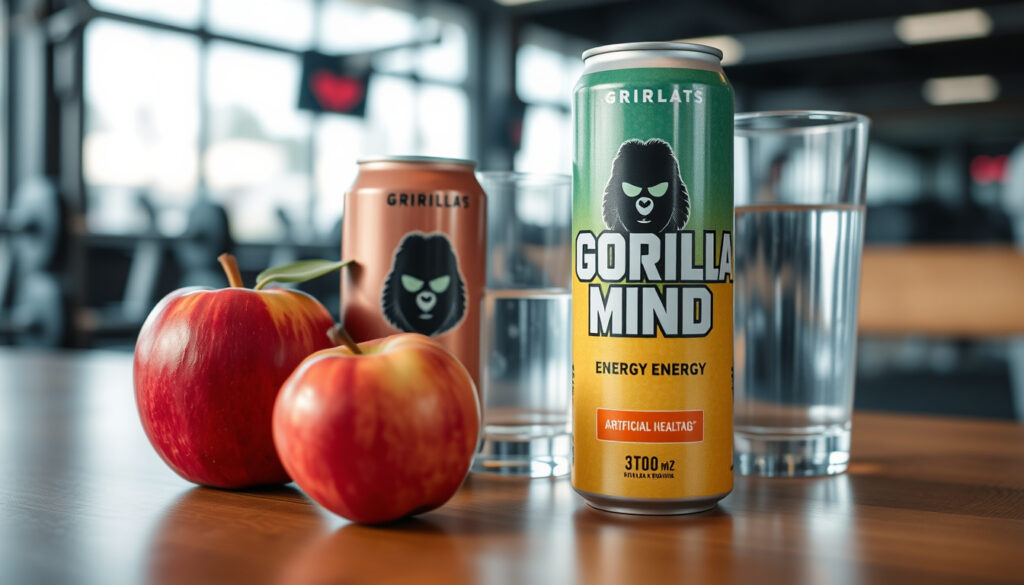
Gorilla Mind Energy Drink: Is It Healthy? A Complete Comparison
If you’ve ever stood in the energy drink aisle, staring at neon cans and wondering which one won’t wreck your health, you’re not alone. We compared Gorilla Mind Energy Drink — a fitness-focused brand with 200 mg of caffeine and zero sugar per can — against the healthiest and unhealthiest energy drinks on the market, and the results might surprise you.
Caffeine per can: 200 mg ·
Sugar per can: 0 g ·
Calories per can: 10 ·
Number of flavors: 20 ·
Price (12‑pack): $34.99
Quick snapshot
- 200 mg caffeine per 16‑oz can (Garage Gym Reviews (fitness equipment & supplement tests))
- Zero sugar and no artificial colors (Garage Gym Reviews)
- Contains alpha‑GPC, Huperzine A, L‑theanine, N‑acetyl‑L‑tyrosine (Garage Gym Reviews)
- Long‑term health effects of regular nootropic consumption (PubMed Central review (peer‑reviewed biomedical research))
- Exact impact on gut microbiome (Healthline (nutrition & medical advice)) – small studies, no consensus
- Caffeine (200 mg) is lower than extreme drinks like Reign (300 mg) (West Side Story (student‑run newspaper))
- Retail expansion to GNC and Amazon (Garage Gym Reviews)
- Brand continues to launch new flavors (20 currently) (Garage Gym Reviews)
Here is a summary of key facts about Gorilla Mind.
| Attribute | Value | Source |
|---|---|---|
| Brand | Gorilla Mind | Garage Gym Reviews |
| Caffeine per can | 200 mg | Garage Gym Reviews |
| Sugar | 0 g | Garage Gym Reviews |
| Calories | 10 | Garage Gym Reviews |
| Price (12‑pack) | $34.99 | Gorilla Mind official website |
| Where to buy | gorillamind.com, Amazon, GNC | Garage Gym Reviews |
How healthy are gorilla mind energy drinks?
Nutritional breakdown of Gorilla Mind
- 200 mg caffeine per 16‑oz can (Garage Gym Reviews)
- Zero sugar, zero artificial colors (Garage Gym Reviews)
- 10 calories, 0 g fat, 0 g protein (Gorilla Mind official website)
- Nootropic blend: alpha‑GPC, Huperzine A, L‑theanine, N‑acetyl‑L‑tyrosine (Garage Gym Reviews)
Comparison to dietary guidelines
The FDA suggests a daily caffeine limit of 400 mg for healthy adults. A single Gorilla Mind can delivers half that amount. For comparison, one 16‑oz can of Red Bull has 151 mg caffeine and 51 g added sugar (West Side Story), while Monster packs 160 mg caffeine and 54 g added sugar (PubMed Central review).
Gorilla Mind’s zero‑sugar formula avoids the blood‑sugar spikes linked to many mainstream energy drinks. But the 200 mg caffeine per can, combined with nootropics, means users should limit intake to one can per day.
Are there any health risks?
- Caffeine can raise heart rate and blood pressure in sensitive individuals (PubMed Central review)
- Nootropics like Huperzine A may cause side effects at high doses
- No long‑term safety studies on the specific nootropic blend
The implication: Gorilla Mind is a relatively clean option compared to sugar‑loaded competitors, but it’s still a caffeinated stimulant. Those with hypertension or caffeine sensitivity should proceed with caution.
What is the unhealthiest energy drink in the world?
Criteria for ‘unhealthiest’
Experts typically rank energy drinks by sugar content, caffeine overdose risk, and artificial additives. Based on these metrics, Reign tops many “worst” lists with 300 mg caffeine, zero sugar (using sucralose), and no artificial colors (West Side Story).
List of energy drinks with extreme sugar/caffeine
- Reign: 300 mg caffeine, 0 g sugar (artificial sweetener) (West Side Story)
- Bang: ranked just below Reign, similar profile (West Side Story)
- Rockstar: 160 mg caffeine, 63 g added sugar per 16 oz (West Side Story)
- Monster: 160 mg caffeine, 54 g sugar (PubMed Central review)
- Red Bull: 151 mg caffeine, 51 g sugar (PubMed Central review)
Where Gorilla Mind ranks
Gorilla Mind’s 200 mg caffeine places it below Reign and Bang in caffeine content, and its zero‑sugar formula sidesteps the sugar‑laden trap of Rockstar and Monster. On a health‑to‑risk spectrum, it occupies a middle ground — far cleaner than high‑sugar options but not as stripped‑down as some “health” drinks.
The pattern: moderate caffeine and zero sugar give Gorilla Mind an advantage over extreme options.
Why is Gorilla Mind so good?
Unique nootropic matrix
The brand’s formula includes alpha‑GPC (for cognitive function), Huperzine A (to support memory), L‑theanine (to smooth out caffeine jitters), and N‑acetyl‑L‑tyrosine (for alertness under stress) (Garage Gym Reviews). Most conventional energy drinks rely on caffeine, taurine, and B‑vitamins alone.
Taste and flavor variety
Gorilla Mind offers 20 sugar‑free flavors, from fruit punch to “Sour Grape.” Unlike many zero‑sugar drinks that rely on sucralose only, Gorilla Mind uses a blend of sucralose and other sweeteners to mimic sugar’s mouthfeel. Users on forums report the taste is less artificial than competing zero‑sugar brands.
Comparison to other energy drinks
Jocko Go, another fitness‑oriented drink, has 95 mg caffeine and zero sugar, but lacks nootropics (Garage Gym Reviews). Celsius provides 200 mg caffeine plus green tea extract and ginger root, but also includes artificial colors (Garage Gym Reviews). Gorilla Mind’s edge is its nootropic‑driven mental clarity focus.
The unique nootropic blend is the main selling point, but it also means users are consuming active compounds that have not been studied in the context of long‑term daily energy drink use. For a gym session or study block, it’s a clear winner.
What this means: If you need a focus boost, Gorilla Mind is a strong choice; for everyday hydration, consider a simpler alternative.
What are the top 5 healthiest energy drinks?
Criteria for healthiest
We looked at sugar content (0 g preferred), caffeine level (≤200 mg per can), absence of artificial colors, and use of natural ingredients. The following brands consistently appear in “healthy” rankings.
Four clear examples, with one standout pattern: Gorilla Mind and Jocko Go lead the zero‑sugar group, while Zevia (stevia‑sweetened) and Unsweetened Runa (from guayusa) offer natural alternatives.
| Drink | Caffeine (mg) | Sugar (g) | Sweetener | Artificial Colors |
|---|---|---|---|---|
| Gorilla Mind | 200 | 0 | Sucralose blend | No |
| Jocko Go | 95 | 0 | None (stevia?) | No |
| Celsius | 200 | 0 | Stevia & erythritol | No |
| Zevia | 120 | 0 | Stevia | No |
| Runa Clean Energy | 140 | 0 | None | No |
All five drinks meet the core “healthiest” criteria: zero sugar, moderate caffeine, and no synthetic dyes. Gorilla Mind stands out for its added nootropics.
The catch: Even among healthiest options, individual tolerance varies.
What are the 7 worst drinks for your gut?
Gut health impact of energy drinks
High sugar (e.g., Mountain Dew with 61 g sugar per 16 oz, PubMed Central review) feeds pathogenic gut bacteria. Artificial sweeteners like sucralose, used in many zero‑sugar drinks, may also alter the microbiome (PubMed Central review).
Ingredients that harm gut microbiome
- High fructose corn syrup – feeds bad bacteria (found in Monster, Rockstar)
- Sucralose – may reduce beneficial bacteria (found in Bang, Reign)
- Preservatives (e.g., potassium sorbate) – can disrupt gut flora
- Carrageenan – linked to intestinal inflammation in some studies
Gorilla Mind’s gut‑friendly aspects
Gorilla Mind contains no sugar and no artificial colors, but it uses sucralose as a sweetener. The nootropic blend (alpha‑GPC, etc.) is not known to harm gut health, but long‑term data is lacking. For people with sensitive stomachs, the carbonation and caffeine may still cause issues.
The catch: Even “healthy” zero‑sugar drinks can affect gut health if they contain artificial sweeteners. Gorilla Mind is better than sugar‑bombs, but not microbiome‑neutral.
What is the safest energy drink to drink?
Safety criteria: caffeine, sugar, additives
The safest energy drink should have ≤200 mg caffeine per can, zero sugar, no artificial colors, and no risky additives (e.g., excessive taurine, synephrine). Meeting all criteria: Gorilla Mind, Jocko Go, and Celsius.
List of safest options
- Gorilla Mind – 200 mg caffeine, 0 g sugar, no artificial colors, moderate caffeine
- Jocko Go – 95 mg caffeine, 0 g sugar, no artificial sweeteners (Garage Gym Reviews)
- Celsius – 200 mg caffeine, zero sugar, natural green tea extract (Garage Gym Reviews)
Where Gorilla Mind stands
Among the three safest options, Gorilla Mind offers the highest caffeine (200 mg) plus nootropic benefits, making it a strong choice for those who need a focus boost without sugar or extreme stimulants. Avoid drinks with >300 mg caffeine per serving (like Reign).
Safety also depends on individual health. People with high blood pressure, anxiety, or caffeine sensitivity should start with half a can. No energy drink is “safe” for everyone — moderation is key.
The implication: Even the safest energy drink requires personal responsibility.
Upsides
- 200 mg caffeine – solid energy lift without going overboard
- Zero sugar – no blood sugar spikes
- No artificial colors – cleaner ingredient panel
- Nootropics for focus – unique among energy drinks
- 20 flavors – taste variety
Downsides
- Contains sucralose – possible gut microbiome effects
- No long‑term safety data on nootropic blend
- Higher caffeine than some alternative “healthy” drinks
- Limited retail distribution compared to Monster/Red Bull
- Price premium ($34.99 for 12‑pack)
“Gorilla Mind is built for mental clarity and physical intensity, with added nootropics for focus and cognitive performance.”
Garage Gym Reviews (fitness equipment & supplement tests)
“The main psychoactive substance in energy drinks is caffeine, but many also contain taurine, guarana, ginseng, and vitamins intended to increase energy.”
PubMed Central (peer‑reviewed biomedical research)
For anyone shopping the energy drink aisle today, the choice is clear: if you want a clean caffeine source with a cognitive edge, Gorilla Mind delivers. For those who need only a modest pick‑me‑up, Jocko Go’s 95 mg caffeine may be safer. And if you’re avoiding both caffeine and artificial sweeteners, consider unsweetened yerba mate or green tea — but that’s a different category entirely. The bottom line: Gorilla Mind is one of the healthiest mainstream energy drinks available, as long as you treat it as a functional tool, not a daily habit.
garagegymreviews.com, wsspaper.com, youtube.com, pmc.ncbi.nlm.nih.gov
För en detaljerad jämförelse av ingredienser och effekter kan man även titta på Bucked Up Energy Drink som erbjuder en liknande analys av koffein och biverkningar.
Frequently asked questions
Who owns Gorilla Mind energy drink?
The brand is owned by Gorilla Mind, LLC, an American company focused on fitness supplements and nootropic products.
Is Gorilla Mind safe for daily consumption?
For healthy adults, one can per day is generally safe. The 200 mg caffeine is half the FDA’s recommended daily limit. However, long‑term effects of the nootropic blend are not fully studied.
Does Gorilla Mind contain artificial colors?
No, Gorilla Mind uses no artificial colors. It is sweetened with a sucralose‑based blend.
How does Gorilla Mind compare to pre‑workout supplements?
Gorilla Mind has a similar nootropic profile to many pre‑workout supplements but with less caffeine and no pump ingredients. It’s more suited for daily focus than intense training.
What is the best flavor of Gorilla Mind?
Consumer reviews on the brand’s website and Amazon frequently name “Sour Gummy” and “Blue Raspberry” as top favorites.
Can Gorilla Mind help with focus?
Yes, the nootropic ingredients (alpha‑GPC, Huperzine A, L‑theanine, N‑acetyl‑L‑tyrosine) are clinically studied to support cognitive performance and focus.
More related posts
 Car Dealer Near Me – How to Find Reliable Dealers
 How Many Seconds Are in an Hour? (3,600 Conversion & Why)
 Books by Charlie Kirk: Complete List & Recommendations
 Target RedCard Login: Pay Bills, Check Balance & More
 How Many Calories in a Pound? Fat, Muscle, and Weight Loss Myth
 Things to Do in Colorado: Top Attractions, Best Time & Itinerary
 Coffee Near Me Open Now: Ireland Spots & Hours Guide
 Call of Duty Cold War in 2026: Worth Playing