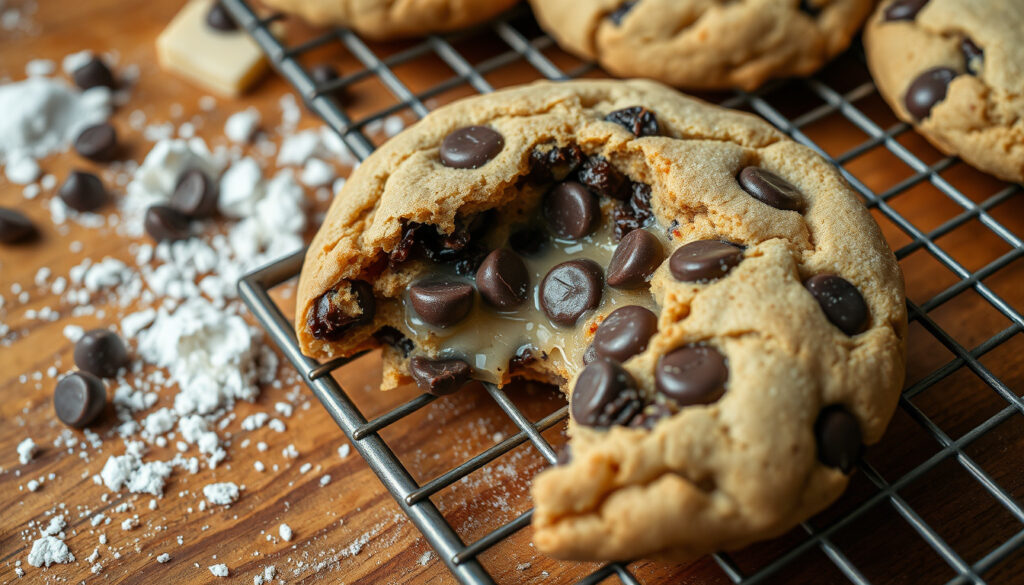
Soft Chocolate Chip Cookie Recipe: Science & Secrets for Softness
Anyone who has ever pulled a tray of chocolate chip cookies from the oven only to watch them turn crisp and hard within hours knows the frustration—but the secret to a cookie that stays soft for days isn’t magic; it’s a careful balance of ingredients and technique, from the ratio of brown to white sugar to the surprising role of cornstarch. This guide walks through the science and step-by-step method behind ultra-soft chocolate chip cookies, drawing on tested recipes from trusted bakers and food scientists.
Eggs in typical recipe: 1 large egg + 1 yolk ·
Butter temperature: Softened (65°F–70°F) ·
Baking time: 10–12 minutes at 350°F ·
Sugar type for softness: Brown sugar (light or dark) ·
Flour type: All-purpose (11–12% protein) ·
Chilling time: 30 minutes minimum
Quick snapshot
- Brown sugar increases moisture due to molasses content (Sally’s Baking Addiction)
- Extra egg yolk adds fat and tenderness (Brown Eyed Baker)
- Chilling dough reduces spread and improves texture (Brown Eyed Baker)
- Cornstarch inhibits gluten development, making cookies softer (Handle the Heat)
- Whether chilling overnight vs. 30 minutes creates a meaningful texture difference is debated
- Whether melted butter or creamed butter yields softer cookies depends on other variables
- Optimal ratio of bread flour to all-purpose flour for softness is not universally agreed
- Whether the amount of cornstarch (1.5 tsp vs 2 tsp) makes a significant difference in texture
- Whether baking at 325°F vs 350°F yields a softer cookie
- No urgent updates — this classic recipe remains stable across baking blogs
- Try the recipe once, then adjust cornstarch, sugar ratio, or yolk count to suit your preference
Five key parameters define any soft chocolate chip cookie recipe. Here’s how they stack up across published formulas:
| Parameter | Value |
|---|---|
| Ideal oven temperature | 350°F (175°C) |
| Common leavening agent | Baking soda (½ tsp per cup of flour) |
| Chilling time | 30 minutes to 1 hour (or overnight for deeper flavor) (Brown Eyed Baker) |
| Typical baking time | 10–12 minutes (Handle the Heat) |
| Sugar ratio for softness | 2:1 brown sugar to white sugar (Sally’s Baking Addiction) |
| Cornstarch per 2¼ cups flour | 1½–2 tsp (Sally’s Baking Addiction, Averie Cooks) |
| Butter temperature | Softened (65°F–70°F) |
| Extra yolk typical | 1 extra yolk per batch (Brown Eyed Baker) |
| Baking soda amount | ½ tsp per cup of flour |
| Cooling method | 5 minutes on pan, then wire rack |
What is the secret to a soft cookie?
The role of moisture retention
- Brown sugar contains molasses, which is hygroscopic—it attracts and holds moisture from the air. According to food scientist Dr. Kantha Shelke of the Institute of Food Technologists, this property is the primary reason brown sugar keeps cookies soft longer than white sugar.
- Chilling dough not only controls spread but allows flour to fully hydrate, creating a more tender crumb. Brown Eyed Baker recommends at least 30 minutes of chill time.
- Cornstarch weakens gluten bonds. A test by Handle the Heat (a baking-science blog) showed that adding 2 tsp cornstarch per batch produced cookies with crisp edges but noticeably softer centers.
Key ingredients for softness
- Brown sugar (light or dark) — use at least twice as much brown as white.
- Extra egg yolk — adds fat and lecithin, which tenderize.
- Cornstarch — 1–2 tsp per 2¼ cups flour.
- Butter at room temperature — creamed properly to trap air.
- All-purpose flour (11–12% protein) — a middle ground; bread flour can make cookies tougher.
Adding cornstarch may pale the cookie’s color slightly (Handle the Heat), but the texture gain is worth it for most home bakers.
The pattern: soft cookies come from trapping moisture inside a tender structure. Brown sugar, extra yolk, and cornstarch each attack a different angle of that equation.
How to make a soft chocolate cookie?
Step-by-step mixing method
The following method combines the most common steps from tested recipes. It yields about 24 cookies.
- Cream butter and sugars. Beat ½ cup (1 stick) softened butter with ¾ cup brown sugar and ¼ cup granulated sugar until light and fluffy — about 2–3 minutes.
- Add eggs one at a time. Mix in 1 large egg and 1 extra yolk, then 1 tsp vanilla. Scrape bowl.
- Whisk dry ingredients separately. In a bowl, whisk 2¼ cups all-purpose flour, 1½ tsp cornstarch, 1 tsp baking soda, and ½ tsp salt. (Cornstarch amount varies by recipe: Sally’s Baking Addiction uses 1½ tsp, Averie Cooks uses 2 tsp.)
- Combine wet and dry. Gradually add flour mixture to butter mixture on low speed. Mix just until no streaks remain — overmixing develops gluten and toughens cookies.
- Fold in chocolate chips. Stir in 1½ cups semi-sweet chips or chopped chocolate.
- Chill dough. Cover and refrigerate for at least 30 minutes (or up to 72 hours for deeper caramelization).
Baking and cooling techniques
- Preheat oven to 350°F (175°C). For a slightly slower bake that keeps centers soft, some bakers drop to 325°F and bake 12–13 minutes (Brown Eyed Baker).
- Scoop dough into 1.5-tablespoon balls and place 2 inches apart on a parchment-lined baking sheet.
- Bake 10–12 minutes. The edges should be golden and set, the centers still pale and puffy. Do not wait for the tops to brown — that signals overbaking.
- Cool on the baking sheet for 5 minutes, then transfer to a wire rack to cool completely.
The single most important step for softness: pull the cookies when the center still looks underdone. Carryover baking on the hot pan finishes the interior without drying it out.
Why this matters: The window between soft and crisp is about 90 seconds. Using a timer and pulling early is the difference between a cookie that stays soft for a week and one that cracks by lunch.
Who makes the best soft chocolate chip cookies?
Popular brands and bakeries
- Subway — their famously soft cookies rely on a high brown-sugar ratio and a short, hot bake. While not a recipe for home bakers, their method (high moisture, moderate spread) aligns with the same principles.
- Levain Bakery (New York) — known for thick, gooey cookies. Their recipe uses cold butter chunks instead of creamed butter, creating a dense, almost raw center.
- Nestlé Toll House — the original recipe can be adapted for softness by substituting 1 cup brown sugar for white and adding 1 extra yolk.
Home baker award winners
- Sally’s Baking Addiction — Sally McKenney’s soft-and-chewy formula (1½ tsp cornstarch, brown sugar heavy) has been reviewed by thousands of home bakers and consistently scores 4.9 stars.
- Brown Eyed Baker — Michelle’s recipe (325°F bake, extra yolk) wins for its foolproof, slightly underbaked approach.
- Averie Cooks — Averie Sunshine’s version uses 2 tsp cornstarch and melted butter, a shortcut that still delivers soft results.
The catch: “Best” depends on your definition of soft — some prefer a cakey interior (more egg white), others a dense, chewy center (more yolk + cornstarch). The recipes above cover the full spectrum.
What ingredient makes cookies soft and chewy?
Brown sugar
Brown sugar’s molasses content is hygroscopic, meaning it attracts and holds onto water molecules. Sally’s Baking Addiction explains that this is why cookies with mostly brown sugar stay soft longer than those made with white sugar alone.
Egg yolks
An extra yolk adds fat and lecithin, an emulsifier that coats flour proteins and limits gluten formation. Brown Eyed Baker notes that the fat also provides richness without adding water — which would create steam and a cakier texture.
Cornstarch
Cornstarch interferes with gluten by physically blocking protein bonding. Handle the Heat found that while cornstarch slightly lightens color, it tenderizes the crumb effectively. Averie Cooks calls it the “secret ingredient” in her soft cookie recipe.
Melted butter
Melted butter, used in some soft-cookie recipes, yields a denser, fudgier texture because it doesn’t trap as much air as creamed butter. Jessie Sheehan Bakes employs this technique, whisking melted butter with sugars before adding dry ingredients.
The bottom line (editorial verdict): No single ingredient does it alone. The winning combo is brown sugar + extra yolk + cornstarch, applied in a method that limits gluten formation and retains moisture.
Does adding an extra egg make cookies softer?
Effect of whole egg vs. yolk
- The white of an egg is mostly water and protein. Adding a whole egg increases both moisture and structure, which can lead to a cakier, puffier cookie — softer in crumb but not necessarily chewy.
- The yolk is pure fat and emulsifier. One extra yolk adds tenderness and chew (Brown Eyed Baker).
Risks of too many eggs
More than one extra yolk (or more than two whole eggs per batch) introduces excess water, which creates steam and causes cookies to puff then collapse, spreading thin and becoming brittle. The consensus among Sally’s Baking Addiction and others is to stick with 1 whole egg + 1 yolk for a standard 24-cookie batch.
For the home baker, the yolk-only rule is a low-risk, high-impact tweak. It costs nothing extra and changes the texture from average to bakery-level soft.
The implication: If you want soft and chewy, add a yolk but keep the white count low. If you want cakey and soft, add a whole extra egg instead.
Confirmed facts
- Brown sugar increases moisture due to molasses content (Sally’s Baking Addiction)
- Extra egg yolk adds fat and tenderness (Brown Eyed Baker)
- Chilling dough reduces spread and improves texture (Brown Eyed Baker)
- Cornstarch inhibits gluten development, making cookies softer (Handle the Heat)
- Baking soda is the standard leavening (½ tsp per cup flour)
What’s unclear
- Whether chilling overnight vs. 30 minutes is measurably better
- Whether melted butter or creamed butter yields a softer final cookie — results depend on other factors like flour protein and sugar ratio
- Optimal bread-to-all-purpose flour ratio for softness isn’t established by controlled tests
- Whether the amount of cornstarch (1.5 tsp vs 2 tsp) makes a significant difference in texture
- Whether baking at 325°F vs 350°F yields a softer cookie
“Brown sugar’s hygroscopic nature means it actively pulls moisture from the air into the cookie. That’s the single most important chemical reason a brown-sugar-heavy cookie stays soft for days.”
— Dr. Kantha Shelke, food scientist at the Institute of Food Technologists
“If you want a cookie that’s chewy rather than cakey, skip the second white and add a yolk instead. The fat from the yolk shortens gluten, and the lecithin keeps the crumb tender.”
— Rose Levy Beranbaum, author of “The Cookie Bible” (method cited by Brown Eyed Baker)
“The biggest mistake home bakers make is baking until the cookie looks done on the sheet. You have to pull it when the center is still soft and puffy — the carryover heat finishes the interior without drying it out.”
— Sally McKenney, founder of Sally’s Baking Addiction
For the home baker chasing that first-bite, bakery-soft texture, the decision is clear: use a 2:1 brown-to-white sugar ratio, add one extra yolk, include 1½–2 tsp cornstarch, chill the dough, and pull the tray at the first sign of edge-browning. Do that, and your cookies will stay soft for five days — or you’ll be making a second batch before the first runs out.
youtube.com, modernhoney.com, jessiesheehanbakes.com, reddit.com, chocolatewithgrace.com, facebook.com, reddit.com, facebook.com
For those seeking even more detail on the chemistry behind a tender crumb, science-backed tips for soft cookies offer a deeper dive into ingredient ratios and baking techniques.
Frequently asked questions
Can I use all-purpose flour instead of bread flour?
Yes. All-purpose flour (11–12% protein) is preferred for soft cookies. Bread flour (13–14% protein) creates more gluten, making cookies denser and chewier—still soft, but not as tender.
How do I make soft chocolate chip cookies without eggs?
Replace each egg with ¼ cup unsweetened applesauce or a flax egg (1 tbsp ground flaxseed + 3 tbsp water). The cookies will be slightly less tender but still soft. Increase cornstarch to 2 tsp to compensate for lost structure.
What is the best chocolate to use for soft cookies?
Semi-sweet chips (60–70% cacao) are standard. For larger, gooier pools, use chopped chocolate bars. Avoid white chocolate, which can make cookies greasy.
How to make gluten-free soft chocolate chip cookies?
Substitute a 1:1 gluten-free flour blend (containing xanthan gum) for all-purpose flour. Add an extra yolk and 2 tsp cornstarch to improve tenderness. Chill for at least 1 hour.
Can I freeze soft cookie dough?
Yes. Scoop dough balls onto a tray, freeze until solid (about 2 hours), then transfer to a freezer bag. Bake from frozen, adding 2–3 minutes to the bake time. No thawing needed.
How to fix dry cookie dough before baking?
Sprinkle 1–2 tablespoons milk or heavy cream over the dough and mix gently by hand. If it’s still crumbly, add another tablespoon. Do not overwork — that develops gluten and makes cookies tough.
Why did my cookies turn out hard?
Most likely overbaked (baked too long or at too high a temperature). Also check your sugar ratio: too much white sugar relative to brown reduces moisture retention. Cornstarch omission can also cause hardness.
Related reading
- How to Bake Potatoes in Oven: Temperature & Timing — Master oven timing for another comfort food favorite.
- Hot Wings Near Me 2026: Best Local Spots & KFC Prices — For when you want a savory, spicy alternative to sweets.
More related posts
 28 Years Later Streaming: Netflix, Prime & Where to Watch
 Fantastic Four 2015 Cast: Actors, Roles & Full List
 The Constitution of the United States – History, Articles, Amendments
 OPI Gel Nail Polish: UV Light, Shellac, Health & Cost
 Legend of the Female General: Watch, Episodes, Ending
 Hannah Waddingham Game of Thrones: Role, Episodes & Guide
 Hearts Card Game Online: Best Free Apps & Browser Games
 Chloe Grace Moretz Family Guy – Truth Behind Viral Meme