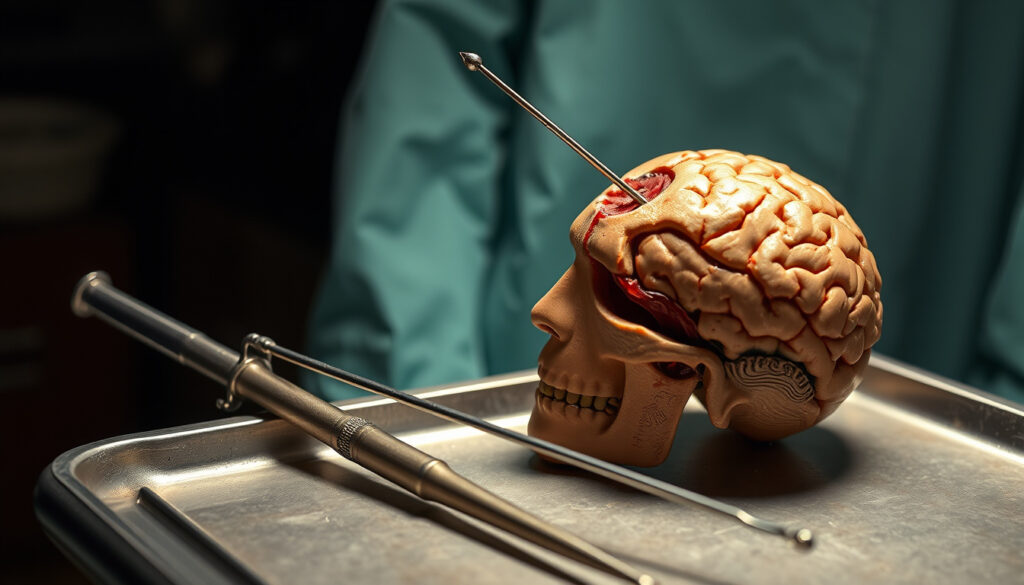
What Is a Lobotomy – Definition, History, Procedure, Effects
Developed in the 1930s, lobotomy represented one of the most controversial chapters in medical history. Tens of thousands of patients underwent the procedure in the United States alone, many of whom suffered irreversible damage to their cognitive and emotional capacities. Understanding what lobotomy was, how it worked, and why it stopped offers important lessons about medical ethics, patient advocacy, and the evolution of psychiatric care.
What Is a Lobotomy?
A lobotomy, also called a leucotomy, is a psychosurgical procedure that involves severing nerve pathways in the brain’s prefrontal lobe. The goal was to alleviate symptoms of mental illness by disrupting connections between the prefrontal cortex and other brain regions responsible for emotion and impulse control.
Modern doctors use the term “neurosurgery for mental disorders (NMD)” to describe surgical interventions that alter brain tissue to address psychiatric conditions. However, unlike lobotomy, NMD is considered only as a last resort for treatment-resistant cases and involves far more precise techniques backed by rigorous ethical oversight.
Lobotomy and leucotomy are often used interchangeably, though leucotomy technically refers specifically to severing the underlying white matter of the frontal lobe. Both terms describe procedures that have been abandoned due to their harmful effects.
Overview of Lobotomy
Neurosurgical severing of prefrontal cortex connections to treat psychiatric disorders
António Egas Moniz (1935), popularized by Walter Freeman in the United States
1940s–1950s, with approximately 40,000–50,000 procedures performed in the United States
Obsolete procedure replaced by antipsychotic medications and modern psychiatric approaches
Key Facts About Lobotomy
- Egas Moniz received the Nobel Prize in Physiology or Medicine in 1949 for developing the prefrontal leucotomy
- Walter Freeman performed the first transorbital lobotomy in 1945, dramatically expanding the procedure’s accessibility
- The transorbital method could be completed in less than 10 minutes and did not require a sterile operating room
- Mortality rates were estimated between 1 and 4 percent, with Soviet reviewers reporting a 5 percent rate
- The development of chlorpromazine (an antipsychotic medication) in the 1950s accelerated the procedure’s decline
- Lobotomies were considered experimental even at the height of their popularity
| Fact | Details |
|---|---|
| Invented | 1935 by António Egas Moniz |
| Nobel Prize Awarded | 1949 to Moniz for prefrontal leucotomy |
| US Pioneer | Walter Freeman, who developed the transorbital method |
| Total Performed in US | Approximately 40,000–50,000 procedures |
| Primary Method | Transorbital lobotomy using a pick-like instrument through the eye sockets |
| Major Decline | 1950s following introduction of chlorpromazine |
History of the Lobotomy
Early Pioneers and Development
While Egas Moniz is credited with developing the modern lobotomy procedure in 1935, the concept of psychosurgery has earlier roots. A neurosurgeon named Burkhardt performed early brain surgery experiments influenced by German physiologist Friedrich Goltz’s animal studies. At least one of Burkhardt’s patients died following the operation, and another later committed suicide, casting doubt on the procedure’s safety even in its earliest iterations.
Moniz initially reported success in treating depression, schizophrenia, panic disorder, and mania through his prefrontal leucotomy technique. His work earned him the Nobel Prize in Physiology or Medicine in 1949, a recognition that would later be viewed as one of the Nobel Committee’s most controversial decisions.
Walter Freeman and the American Expansion
Walter Freeman dramatically expanded lobotomy use in the United States by promoting it through media as a “miracle procedure,” despite heavy resistance and criticism from American neurosurgeons. Freeman introduced the transorbital lobotomy in 1945, which fundamentally changed the procedure’s accessibility and application.
This technique involved forcing a pick-like instrument through the eye sockets to pierce the thin bone separating the orbits from the frontal lobes. The procedure could be performed in less than 10 minutes, required no surgical suite, and was often used on patients with relatively minor mental disorders. Freeman’s promotion led to overwhelming public demand, though the medical establishment remained skeptical.
During the mid-20th century, psychiatric institutions were severely overcrowded, and treatment options were limited. Lobotomy offered what appeared to be a quick solution for managing difficult patients, making it attractive to families and institutional administrators alike.
Global Usage and Criticism
Early skepticism emerged from Soviet psychiatry between 1936 and 1937. Soviet reviewers expressed alarm at the procedure’s severe complications and questioned its efficacy. They noted that symptoms like fear, depression, and agitation often resolved spontaneously without such a dramatic intervention, and they recommended against performing lobotomy in the USSR.
Tens of thousands of lobotomies were performed in the United States during the mid-1900s, with many also conducted in the United Kingdom, Scandinavia, and other Western nations. The procedure fell out of use in the 1950s due to its devastating impact on patients and their families, accelerated by the development of antipsychotic medications.
How Is a Lobotomy Performed?
Types of Lobotomy Procedures
Lobotomy procedures included several variations, each with distinct surgical approaches. Medical records and historical accounts document three primary types:
- Topectomy: Surgical removal of parts of the frontal lobe
- Leucotomy or leukotomy: Severing of underlying white matter connecting the prefrontal cortex
- Transorbital lobotomy: Freeman’s streamlined method using an instrument inserted through the eye sockets
The transorbital approach, introduced by Freeman in 1945, represented the most dramatic simplification. Unlike traditional leucotomy, which required drilling holes in the skull, the transorbital method used a mallet to drive a sharp instrument through the thin bone behind the eye socket. This “ice pick” technique could reach the frontal lobe through the orbital plate, severing neural connections without opening the skull.
The Transorbital Method Explained
In Freeman’s transorbital lobotomy, the patient was first rendered unconscious through electroconvulsive therapy. The patient would then sit upright or lie on their back, and Freeman would insert a pick-like instrument above the eyeball, driving it through the orbital bone with a mallet. He would then sweep the instrument side to side, cutting white matter pathways.
The entire procedure took only a few minutes and was often performed in converted rooms or even in Freeman’s office. He traveled the country in a van he called the “lobotomobile,” performing procedures on hundreds of patients across multiple states. This casual approach to brain surgery shocked professional observers and contributed to growing concerns about the procedure’s safety.
The transorbital lobotomy was performed without proper anesthesia in many cases, relying instead on the convulsions induced by electroconvulsive therapy. This practice, combined with the lack of sterile conditions, created severe risks of infection, hemorrhage, and death.
Effects and Risks of Lobotomy
Immediate Surgical Complications
Lobotomies carried severe immediate surgical risks. Mortality rates were estimated between 1 and 4 percent, though Soviet reviewers reported a 5 percent mortality rate. These figures represented a significant risk given the elective nature of many procedures performed on patients with non-life-threatening psychiatric conditions.
Immediate surgical complications included hemorrhage and intracranial hemorrhages (bleeding inside the skull), infection and brain abscesses, seizures, increased body temperature, vomiting, bladder and bowel incontinence, and eye problems such as ptosis (drooping eyelids) and nystagmus (involuntary eye movements).
Long-Term Consequences
The long-term consequences of lobotomy were profound and often devastating. While the procedure was designed to reduce tension and agitation, many patients experienced effects that proved more disabling than their original psychiatric conditions.
- Personality changes: Profound alterations, emotional blunting, and apathy
- Cognitive impairment: Reduced intellectual function and poor ability to concentrate
- Motor control issues: Incontinence and loss of motor control, weakness
- Seizure disorders: Developing months or years after surgery
- Behavioral changes: Loss of initiative, passivity, social withdrawal, difficulty maintaining relationships
- Functional decline: Inability to plan, initiate activities, or maintain employment; loss of ability to live independently
- Neurological damage: Dementia with memory decline and personality changes
- Other effects: Changes in appetite, changes in language ability, decreased depth and intensity of emotional response
The main long-term side effect was described as “mental dullness,” with patients losing their personalities and ability to function independently. While some patients did show reduced agitation and could be discharged from institutions, many experienced devastating consequences that permanently altered their lives.
Variability of Outcomes
The impact of lobotomy on patients was highly variable but predominantly negative. A large proportion of transorbital lobotomized patients exhibited reduced tension or agitation, but many showed apathy, passivity, lack of initiative, and decreased emotional response. The consequences were described as “mixed” overall, with many patients suffering devastating postoperative complications.
Lobotomy Controversies and Modern Status
Famous Cases and Public Outcry
Rosemary Kennedy, the younger sister of President John F. Kennedy, represents one of the highest-profile failed lobotomy cases. After undergoing the procedure in 1941 to treat seizures and extreme mood shifts, she lost her ability to walk or talk, experienced permanent personality alteration, and was left with severe physical disability. She spent the remainder of her life in institutions.
Ominous portrayals of lobotomized patients in novels, plays, and films further diminished public opinion of the procedure. The character of McMurphy in Ken Kesey’s “One Flew Over the Cuckoo’s Nest” and its film adaptation helped cement the procedure’s reputation as a tool of institutional control that destroyed individual will and identity.
Why Did Lobotomies Stop?
Several factors contributed to the decline and eventual abandonment of lobotomy. The development of antipsychotic medications provided effective alternatives and contributed significantly to the decline of lobotomy practice. Chlorpromazine, introduced in the early 1950s, offered a pharmaceutical approach to managing psychotic symptoms without surgery.
Growing evidence of the procedure’s devastating effects, combined with increasing awareness of medical ethics, made lobotomy increasingly difficult to justify. The medical establishment began demanding higher standards of proof before approving invasive psychiatric interventions, and malpractice lawsuits further discouraged the practice.
Modern Alternatives and Current Status
Lobotomies are now recognized as a discredited procedure and are not performed today. The term “neurosurgery for mental disorders (NMD)” is used by modern doctors to describe surgical procedures that alter brain tissue to alleviate mental health conditions, though doctors may consider NMD only as a last resort for treatment-resistant mental health issues.
Modern psychosurgery, when it occurs, involves precise targeting of specific brain structures using stereotactic techniques, computer-guided imaging, and rigorous ethical oversight. These procedures bear little resemblance to the crude interventions of the lobotomy era and are reserved for severe, treatment-resistant cases after exhausting all other options.
Timeline: The Rise and Fall of Lobotomy
- 1935: António Egas Moniz performs the first prefrontal leucotomy in Portugal
- 1936–1937: Soviet psychiatrists raise concerns and recommend against the procedure in the USSR
- 1941: Rosemary Kennedy undergoes lobotomy with devastating consequences
- 1945: Walter Freeman introduces the transorbital lobotomy in the United States
- 1949: Moniz receives the Nobel Prize in Physiology or Medicine
- Early 1950s: Chlorpromazine introduced, providing pharmaceutical alternatives
- 1950s–1960s: Lobotomy practice rapidly declines and eventually ceases
What We Know and What Remains Unclear
- Procedure details and surgical techniques used
- Historical timeline of development and peak usage
- Approximately 40,000–50,000 procedures performed in the US
- Moniz received Nobel Prize in 1949
- Mortality rates ranging from 1–5 percent
- General categories of long-term effects documented
- Rosemary Kennedy’s case and outcome
- Precise long-term outcomes for individual patients due to inconsistent record-keeping
- Complete documentation of all procedures performed, particularly in non-clinical settings
- Full extent of Freeman’s practice, including procedures in his “lobotomobile”
- Accurate patient demographics across all regions
- Details of early experiments by Burkhardt and their influence on later developments
Lessons From the Lobotomy Era
The lobotomy era offers important lessons about the relationship between medical innovation and ethical responsibility. The procedure emerged at a time when psychiatric institutions were overwhelmed, families were desperate, and understanding of brain function was limited. These factors created conditions where a flawed intervention could spread rapidly before its harms were fully understood.
The medical community’s initial resistance to Freeman’s methods, combined with growing documentation of negative outcomes, ultimately prevailed over popular enthusiasm. This history underscores the importance of rigorous clinical trials, independent oversight, and willingness to question even celebrated procedures when evidence suggests harm.
For those interested in understanding how medical understanding evolves, examining cases like canker sore on tongue can illustrate how modern medicine approaches conditions with far greater precision and fewer invasive interventions than the lobotomy era would have permitted.
Sources and Expert Perspectives
“Lobotomies were considered experimental even at the height of their popularity.”
— Healthline Medical Review
“While some patients did show reduced agitation and could be discharged from institutions, many experienced devastating consequences that permanently altered their lives.”
— Opus Treatment Historical Analysis
Primary sources for understanding lobotomy include medical journals from the mid-20th century, Nobel Prize archives documenting Moniz’s recognition, and institutional records from psychiatric hospitals that performed the procedure. Modern analyses have been published in peer-reviewed journals including the Journal of the History of Medicine and Allied Sciences.
Summary
A lobotomy was a neurosurgical procedure that severed nerve pathways in the brain’s prefrontal lobe to treat psychiatric disorders. Pioneered by Egas Moniz in 1935 and dramatically expanded by Walter Freeman in the United States, the procedure was performed on tens of thousands of patients over two decades. While some patients showed reduced agitation, the procedure’s devastating long-term effects—including personality changes, cognitive impairment, and functional decline—eventually led to its abandonment. The development of antipsychotic medications in the 1950s provided safer alternatives and accelerated the procedure’s decline. Today, lobotomy is recognized as a discredited chapter in medical history, offering important lessons about medical ethics, the need for rigorous evidence, and the importance of patient advocacy. Those seeking to understand how modern medicine approaches collagen and tissue health will find a stark contrast to the crude interventions of the lobotomy era.
Frequently Asked Questions
Why were lobotomies performed?
Lobotomies were performed to treat psychiatric disorders including depression, schizophrenia, panic disorder, and mania. At the time, psychiatric institutions were overcrowded, treatment options were limited, and families often sought any intervention that might help. Lobotomy offered a seemingly quick solution for managing difficult patients, though its effectiveness was never proven and its harms were severe.
What happened to Rosemary Kennedy after her lobotomy?
Rosemary Kennedy, sister of President John F. Kennedy, underwent lobotomy in 1941 at age 23. The procedure left her unable to walk or talk, with permanent personality alteration and severe physical disability. She spent the remainder of her life in institutions, a outcome that highlighted the devastating consequences of the procedure.
Is lobotomy still performed today?
No, lobotomy is not performed today. The procedure has been discredited and abandoned. Modern doctors use the term “neurosurgery for mental disorders (NMD)” for surgical interventions involving brain tissue, but these are precise procedures with rigorous ethical oversight, reserved only as a last resort for treatment-resistant cases.
What is a transorbital lobotomy?
A transorbital lobotomy was the method popularized by Walter Freeman in 1945. It involved inserting a pick-like instrument through the eye socket to pierce the thin bone separating the orbit from the frontal lobe, then cutting neural pathways. The procedure could be completed in less than 10 minutes, did not require a surgical suite, and was performed on patients with relatively minor mental disorders.
What alternatives to lobotomy exist?
Modern alternatives include antipsychotic medications, psychotherapy, electroconvulsive therapy (performed with proper anesthesia and oversight), and other pharmaceutical interventions. These treatments have proven effective for many psychiatric conditions without the devastating side effects of lobotomy.
Who invented the lobotomy?
António Egas Moniz is credited with inventing the prefrontal leucotomy in 1935, for which he received the Nobel Prize in Physiology or Medicine in 1949. However, earlier experiments were conducted by neurosurgeon Burkhardt, and Walter Freeman significantly expanded the procedure’s use in the United States through his transorbital method.
More related posts
 Pearl (2022 Film): Prequel, Plot, and Mental Illness
 Bones in the Body: 206 Count, Types, Functions & Growth
 Cast of Haunted Hotel: Voice Actors & Season 2 News
 How Old Is SZA’s Daughter? The Truth About Her Family
 Garage Door Repair Near Me: Costs, Common Problems & Safety
 Ireland Mortgage Rates 2026: Will They Drop to 3% Again
 University of Arizona Online – Guide to Programs Costs and Reviews
 Playing Games Blog PlayBattleSquare: GameBattles & Earning Guide