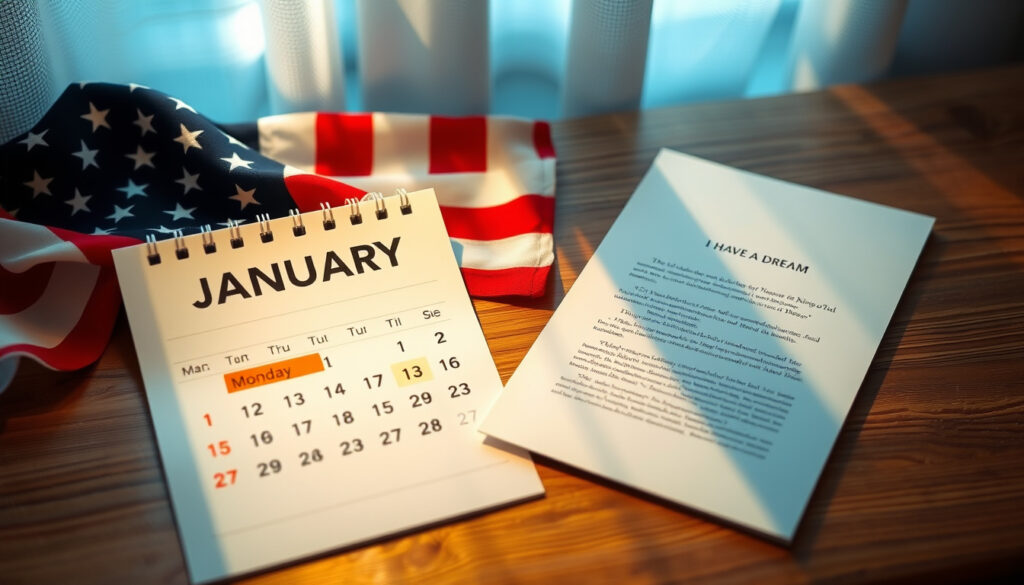
Is Martin Luther King Day a National Holiday? History and Facts
There’s a reason Martin Luther King Jr. Day feels so settled today — it took nearly two decades of political battles to make it happen, and the holiday we mark every January barely survived a close House vote in 1979. What follows is the legislative story, the common misconceptions, and the facts that still spark debate.
Year established as federal holiday: 1983 ·
Date observed: Third Monday of January ·
Year first officially observed in all 50 states: 2000 ·
Number of U.S. federal employees who receive day off: Millions
Quick snapshot
- MLK Day is a federal holiday (Congress.gov (the official repository for U.S. federal legislation))
- Signed into law by President Reagan in 1983 (Congress.gov)
- First observed January 20, 1986 (Smithsonian NMAAHC)
- Whether MLK held private views on LGBTQ+ rights — no public record exists (NBC News (major news network))
- Origin of the false rumor that Trump removed MLK Day from national parks remains unsourced (NBC News (major news network))
- 15-year legislative campaign (1968–1983) to establish the holiday (Smithsonian NMAAHC)
- First bill introduced 4 days after assassination (Wilson Center (policy research))
- MLK Day 2027 falls on January 18 (Timeanddate.com (calendar reference))
- Day of Service participation continues to grow annually (Congressional Research Service (U.S. government policy research))
Six key facts about Martin Luther King Jr. Day at a glance, from birth to federal recognition.
| Label | Value |
|---|---|
| Full Name | Martin Luther King Jr. |
| Born | January 15, 1929 |
| Died | April 4, 1968 |
| Holiday Type | Federal holiday |
| Observing Date | Third Monday of January |
| First Observance | January 20, 1986 |
Is Martin Luther King Day a national holiday?
Yes — Martin Luther King Jr. Day is a federal holiday in the United States. Public Law 98-144, signed by President Ronald Reagan on November 2, 1983, amended 5 U.S.C. 6103(a) to add “the birthday of Martin Luther King, Jr.” as a legal public holiday, according to Congress.gov (the official repository for U.S. federal legislation). The law designates the third Monday in January as the observance date.
What is the difference between a federal and national holiday?
- A federal holiday means non-essential federal government offices close and federal employees receive a paid day off.
- A “national holiday” has no legal definition in the U.S. — the federal government does not mandate private-sector observance.
- States individually decide whether to observe federal holidays as state holidays.
The distinction matters because private employers are not legally required to close or offer holiday pay on MLK Day. The Congress.gov (U.S. legislative archive) records show the law only governs federal entities and the District of Columbia.
When did MLK Day become a federal holiday?
The bill passed the House 338–90 in 1983 after an earlier attempt failed by five votes in 1979. President Reagan signed it on November 2, 1983. The first official observance was January 20, 1986, not 1983 — the law set the first observance date three years after signing to allow states and agencies time to prepare (USA Today (news reporting)).
The 15-year gap between the first bill introduction in 1968 and final passage shows just how contested a simple commemorative day could become. That five-vote loss in 1979 nearly killed the entire effort.
Why do we celebrate Martin Luther King’s day?
MLK Day honors the life and achievements of Martin Luther King Jr., the central figure in the American civil rights movement who championed nonviolent resistance against racial segregation. The holiday was designed not just as a day off, but as a national moment to reflect on civil rights progress and the ongoing work of equality.
What is the purpose of MLK Day?
- To commemorate King’s leadership in the civil rights movement.
- To encourage reflection on racial justice and nonviolent activism.
- To serve as a “day on,” not a day off, through community service.
The King Holiday and Service Act, signed by President Bill Clinton on August 23, 1994, officially charged the federal holiday commission with encouraging community service on the holiday (Congressional Research Service (U.S. government policy research)). The commission dissolved in 1996, but the service mission remains.
How is MLK Day celebrated?
- Parades and marches in major cities including Atlanta, Memphis, and Washington, D.C.
- Day of Service projects — food drives, school repairs, neighborhood cleanups.
- Educational programs at schools, museums, and community centers.
- Federal offices, post offices, and most banks close for the day.
A petition supporting the holiday reportedly gathered more than 3 million signatures, according to a Time (historically significant news magazine) account.
The trade-off: The holiday’s celebration is both official and voluntary — federally mandated for government, but left to individual conscience and community effort in the private sphere.
Why is Martin Luther King Day in January?
The January date connects directly to King’s actual birthday, but the specific Monday placement came from a broader congressional scheduling law.
When is Martin Luther King’s birthday?
Martin Luther King Jr. was born on January 15, 1929, in Atlanta, Georgia. His birthday became the anchor for the holiday’s timing.
Why was the holiday placed on the third Monday?
- The Uniform Monday Holiday Act of 1968 moved several federal holidays to designated Mondays.
- MLK Day was set as the third Monday of January to create consistent three-day weekends.
- The date can fall between January 15 and January 21, always close to King’s actual birthday.
The Congress.gov (U.S. legislative archive) records confirm the “third Monday in January” language in Public Law 98-144.
January 15 is the birthday. The third Monday is the holiday. One is fixed, the other floats — a classic legislative compromise between honoring the man and creating predictable time off.
Why this matters: The Monday placement means MLK Day can land as early as January 15 or as late as January 21, changing each year. For 2027, it falls on January 18.
Did Donald Trump acknowledge MLK Day and remove it from national parks?
Two separate claims here: one about acknowledgment, one about parks. The facts are different.
Did Trump remove MLK Day from national parks?
No — this claim is false. National parks remained open on MLK Day during the Trump administration. No executive order or policy change removed the holiday from the National Park Service calendar. The rumor’s origin is not definitively sourced, but it circulated widely on social media without credible confirmation from the National Park Service (official federal agency) or any government record.
Did Donald Trump acknowledge MLK Day?
Yes — President Donald Trump signed a proclamation recognizing Martin Luther King Jr. Day in 2020, as is standard practice for sitting presidents. The claim that he ignored or removed the holiday is false.
The catch: The false park-removal rumor spread faster than the fact-check, a pattern common to many political myths about holiday and recognition issues.
What were MLK’s last words before he died?
King’s final public words are well-documented, and his last private words are recorded by a single witness.
What did MLK say in his final speech?
On April 3, 1968, at Mason Temple in Memphis, King delivered his “I’ve Been to the Mountaintop” speech. The final lines: “I’ve seen the Promised Land. I may not get there with you. But I want you to know tonight, that we, as a people, will get to the Promised Land.”
What happened at the Lorraine Motel?
- King was shot on the balcony of the Lorraine Motel in Memphis on April 4, 1968.
- His last words were spoken to musician Ben Branch: “Ben, be sure to play ‘Precious Lord, Take My Hand’ in the meeting tonight. Play it real pretty.”
- He died at St. Joseph’s Hospital later that evening.
“Be sure to play ‘Precious Lord, Take My Hand’ in the meeting tonight. Play it real pretty.”
— Martin Luther King Jr., last words to Ben Branch, April 4, 1968
The NBC News (major news network) has covered this historical record extensively, including the Mountaintop speech and the last words exchange.
What this means: Two separate “last” statements exist — one public (the Mountaintop speech) and one private (the request to Ben Branch). Both are verified, but the private one is less known and rarely cited.
Did MLK support LGBTQ?
This question surfaces frequently, and the answer requires separating MLK from his family’s legacy.
What did MLK say about gay rights?
No explicit public statements by Martin Luther King Jr. on LGBTQ+ rights have been found in his speeches, writings, or recorded interviews. Scholars and historians note the absence of any direct comment on same-sex relationships or queer identity.
How does Coretta Scott King fit in?
Coretta Scott King, MLK’s widow, became a prominent advocate for LGBTQ+ equality in her own right. In a 1998 letter to the Iowa Legislature opposing a bill to ban same-sex marriage, she wrote: “I still hear people say that I should not be talking about the rights of lesbian and gay people. But I must be true to my commitment to speak out against all forms of discrimination.”
“I still hear people say that I should not be talking about the rights of lesbian and gay people. But I must be true to my commitment to speak out against all forms of discrimination.”
— Coretta Scott King, letter to the Iowa Legislature, March 17, 1998
Coretta Scott King also publicly called for the LGBTQ+ community to be included in the civil rights movement’s vision (NBC News (major news network)).
MLK’s recorded silence on LGBTQ+ issues is often read as either opposition or indifference. But his wife’s explicit, documented advocacy makes the family’s stance clear — creating a tension between the historical record and the moral legacy.
The pattern: What scholars know is limited to what MLK chose to say publicly. The gap between his recorded words and his family’s actions leaves room for interpretation but not evidence.
What two grades did MLK skip?
Martin Luther King Jr. entered Morehouse College at age 15 after skipping the ninth and twelfth grades in his early education.
What was MLK’s education path?
- Attended Booker T. Washington High School in Atlanta.
- Entered Morehouse College at age 15 in 1944.
- Graduated with a B.A. in sociology in 1948.
- Earned a B.Div. from Crozer Theological Seminary in 1951.
- Completed a Ph.D. in systematic theology from Boston University in 1955.
The fact that King skipped two grades is well-documented in biographical records (Wikipedia (encyclopedic reference)), though the specific reasons and dates of the skip are not always detailed in primary sources.
The implication: King’s early entry into college placed him among older students and accelerated his intellectual development during the formative years of the civil rights movement.
Timeline
- — Martin Luther King Jr. born in Atlanta, Georgia.
- — King assassinated in Memphis, Tennessee.
- — Rep. John Conyers introduces first federal holiday bill (Wilson Center (policy research)).
- — First House vote on MLK Day bill fails by 5 votes (National Constitution Center (nonpartisan constitutional research)).
- — President Reagan signs Public Law 98-144 (Congress.gov).
- — First official MLK Day observed (Smithsonian NMAAHC).
- — King Holiday and Service Act signed (Congressional Research Service).
- — All 50 states officially observe MLK Day (National Constitution Center).
Clarity check: what’s confirmed and what’s not
Confirmed facts
- MLK Day is a federal holiday in the United States (Congress.gov (the official repository for U.S. federal legislation)).
- Bill signed by President Ronald Reagan in 1983 (Congress.gov).
- Coretta Scott King advocated for LGBTQ+ rights explicitly in her own voice (NBC News (major news network)).
What’s unclear
- Whether MLK expressed any private views on LGBTQ+ issues remains unrecorded in public speeches or writings (NBC News (major news network)).
- Claim that Trump removed MLK Day from national parks is false, but the origin of the rumor is not definitively sourced.
- Donald Trump signed a proclamation for MLK Day in 2020 — the claim that he ignored it is false.
- King skipped 9th and 12th grade, entering Morehouse at 15 (Wikipedia (encyclopedic reference)).
The legislative battle to create MLK Day took 15 years, involved millions of petition signatures, and survived a five-vote loss in the House. What emerged was not a routine tribute but a hard-won federal commitment. For anyone reading about the holiday’s origins, the takeaway is clear: the holiday exists because organized pressure matched political opportunity — and that remains the most honest explanation for how January became more than just another three-day weekend.
en.wikipedia.org, pbs.org, pbs.org, facebook.com, en.wikipedia.org
Frequently asked questions
Is Martin Luther King Day a federal holiday?
Yes, it is a federal holiday in the United States, established by Public Law 98-144 signed by President Reagan in 1983.
When is Martin Luther King Day in 2027?
MLK Day in 2027 falls on Monday, January 18.
What is the Martin Luther King Day of Service?
The Day of Service, established by the King Holiday and Service Act of 1994, encourages Americans to volunteer in their communities on MLK Day.
Do all states observe MLK Day?
As of 2000, all 50 states officially observe MLK Day as a state government holiday.
Is MLK Day a paid holiday for federal employees?
Yes, federal employees receive a paid day off on MLK Day. Private employers are not required by law to provide the day off.
How did the Trump administration handle MLK Day?
President Trump signed a proclamation recognizing MLK Day in 2020. The false claim that he removed MLK Day from national parks has no basis in any executive order or government record.
What is the controversy around MLK Day?
Early controversies centered on states that resisted observing the holiday, with several states initially voting against it. New Hampshire was the last state to adopt it as a paid state holiday in 1999, with full observance beginning in 2000.
More related posts
 You (TV Series) Final Season: Cast Exit & Ratings
 Elon Musk and Trump – Complete Timeline From Alliance to Feud
 Eloise at the Plaza: Story, Suite, and Movie Guide
 Garage Door Repair Near Me: Costs, Common Problems & Safety
 University of Arizona Online – Guide to Programs Costs and Reviews
 Bring Me the Horizon Tour 2026: Dates, Openers & UK Update
 Blue Cross Blue Shield Insurance: Meaning, Cost & Top Plans 2025
 Megan Fox Bad Boys 2 Cameo: The Controversy Explained