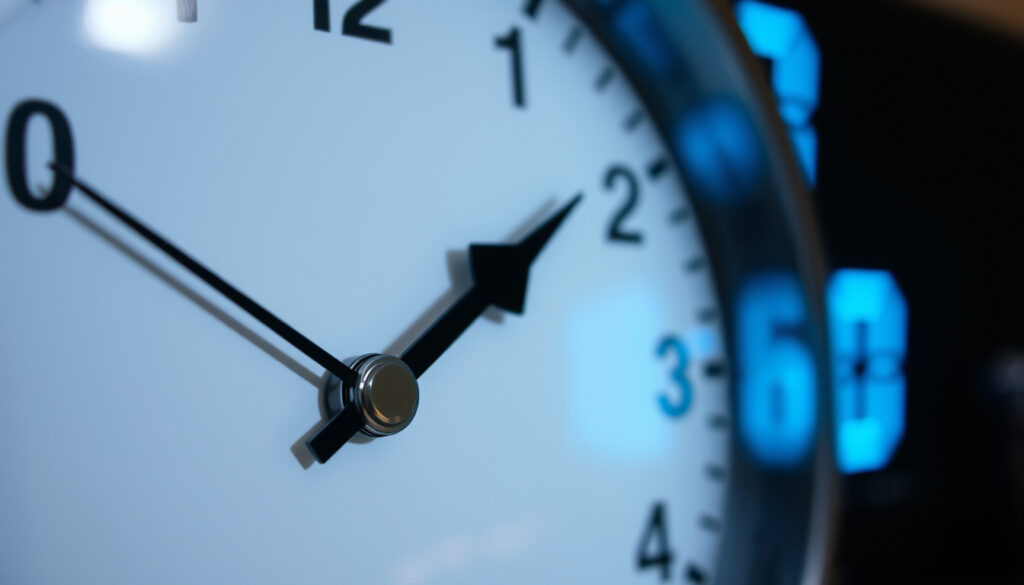
How Many Seconds Are in an Hour? (3,600 Conversion & Why)
If you’ve ever needed to figure out exactly how many seconds are in an hour, the answer is 3,600 — but the math behind it is only half the story. This guide walks you through the simple formula, explains why the number is 3,600 (hint: it involves ancient Sumerians and the number 60), and shows how to convert any time span into seconds.
Seconds in 1 hour: 3,600 ·
Minutes in 1 hour: 60 ·
Seconds in 1 minute: 60 ·
Seconds in 24 hours: 86,400 ·
Seconds in 1 year (365 days): 31,536,000
Quick snapshot
- 1 hour = 60 minutes (Wikipedia: Sexagesimal system)
- 1 minute = 60 seconds (Wikipedia: Sexagesimal system)
- 1 hour = 3,600 seconds (Wikipedia: Sexagesimal system)
- Ancient Sumerians used a base-60 system (sexagesimal) (Wikipedia: Sexagesimal origin)
- 60 is divisible by 2, 3, 4, 5, 6, 10, 12, 15, 20, 30 (Wikipedia: Sexagesimal origin)
- Adopted by Babylonians and later Greek astronomers (Wikipedia: Sexagesimal origin)
- Confusing minutes and seconds
- Forgetting to multiply by 60 twice
- Using 100 instead of 60
- Computing timestamps (Wikipedia: Sexagesimal in timekeeping)
- Astronomy angular measurements (Wikipedia: Sexagesimal in timekeeping)
- Daily planning and scheduling (Wikipedia: Sexagesimal in timekeeping)
| Time Unit | Equivalent in Seconds |
|---|---|
| 1 minute | 60 |
| 1 hour | 3,600 |
| 1 day | 86,400 |
| 1 week | 604,800 |
| 1 month (30 days) | 2,592,000 |
| 1 year (365 days) | 31,536,000 |
The table above shows the standard time-to-seconds conversions used globally.
How many seconds are there in 1 hour?
The direct answer: 1 hour = 3,600 seconds. This comes from a simple multiplication: 60 minutes per hour × 60 seconds per minute. Let’s break it down.
Conversion formula
To convert hours to seconds, use the formula:
- Seconds = Hours × 60 (minutes per hour) × 60 (seconds per minute)
- Or simplified: Seconds = Hours × 3,600
The formula is standard worldwide and fixed by the international time system (Wikipedia: Time measurement).
Step-by-step calculation
Follow these steps to calculate seconds in any number of hours:
- Start with the number of hours (e.g., 1 hour).
- Multiply by 60 to get minutes: 1 × 60 = 60 minutes.
- Multiply those minutes by 60 to get seconds: 60 × 60 = 3,600 seconds.
The result is 3,600 seconds for a single hour. This pattern holds for any number of hours — just multiply by 3,600 (Colmanweb: Sexagesimal teaching document).
The implication: the formula itself is a direct consequence of the base-60 system.
For anyone who needs quick time conversions, remembering the number 3,600 is the key. You can double-check by counting seconds on a stopwatch: one full hour always ticks exactly 3,600 times.
Why is 1 hour 3600 seconds?
That 3,600-second figure didn’t come from nowhere. It stems directly from the historical decision to divide an hour into 60 minutes and each minute into 60 seconds — a system known as sexagesimal (base 60).
Historical origin of the 60-minute hour
The sexagesimal system originated with the ancient Sumerians around 4,500 years ago (Knowledge Based Society: Sumerian sexagesimal origins). The Babylonians later adopted and refined it, eventually applying base-60 to timekeeping.
“The Babylonians divided a day into 24 hours, each hour into 60 minutes, and each minute into 60 seconds.”
— Drexel University: History of Bases Used in Ancient Civilizations (Tier 1 academic source)
This system was so practical that it survived for millennia and continues as the global standard for time and angular measurement.
Mathematical reasoning
Why base 60? Because 60 is a highly composite number — it has many divisors: 2, 3, 4, 5, 6, 10, 12, 15, 20, 30, and 60 itself. This made it easy to split an hour into fractions without dealing with decimals (Wikipedia: Advantages of sexagesimal).
The result: 1 hour = 60 minutes, so seconds per hour = 60 × 60 = 3,600. The math follows naturally from the base.
The pattern: the number 60’s divisibility is the mathematical engine behind the entire time system.
Some assume an hour must be 100 minutes because we use base-10 for most measurements. That would give 10,000 seconds — but our clocks still tick in base-60. The 3,600-second hour is a relic of Sumerian counting, not a decimal oversight.
Why is 1 hour 60 minutes and 1 minute 60 seconds?
This two-part structure — 60 minutes in an hour and 60 seconds in a minute — is the sexagesimal system in action. Let’s explore its advantages.
The sexagesimal system
In base-60, you count to 60 before moving to the next column (Colmanweb: How sexagesimal works). So 1 hour = 60 minutes, and 1 minute = 60 seconds. It’s the same pattern as decimal, just with 60 instead of 10.
As Numberphile explains, the Babylonians may have even used a finger-counting method on the knuckles to reach 60 on two hands.
Advantages of base-60
- 60 is divisible by 1, 2, 3, 4, 5, 6 — so you can easily split an hour into halves, thirds, quarters, fifths, and sixths using whole minutes.
- It’s the smallest number divisible by every whole number from 1 through 6 (Wikipedia: 60 as a highly composite number).
- Greek astronomers adopted the system for map coordinates and angles, reinforcing its use in science.
The pattern: one hour can be divided neatly into 30, 20, 15, 12, 10, 6, 5, 4, 3, 2, and 1 minute segments — all whole numbers (Wikipedia: Flexible divisibility).
What this means: the practical benefit of 60 is that scheduling and fractions become simple, whole-number operations.
How many seconds per 24 hours?
For a full day, multiply the seconds in one hour by 24: 3,600 × 24 = 86,400 seconds.
Calculating seconds in a day
The calculation is straightforward:
- 24 hours × 3,600 seconds per hour = 86,400 seconds
- You can also go: 24 hours × 60 minutes = 1,440 minutes; then 1,440 × 60 = 86,400 seconds.
This number is fundamental in computing — UNIX timestamps, for example, count seconds since January 1, 1970, making 86,400 the length of a single day in that system (Wikipedia: Unix time).
Practical uses
Knowing the seconds in a day helps with:
- Scheduling tasks that require precision (e.g., medical dosing, event timing).
- Understanding data storage durations (e.g., video length in seconds).
- Astronomy and navigation, where angular measurements use the same sexagesimal base.
The implication: 86,400 seconds is the daily container — a number that appears in everything from calendar calculations to parking meters.
How many seconds in a minute?
The simplest conversion: 1 minute = 60 seconds. This is the base unit that connects minutes to hours.
The base unit of time
The second is the SI base unit for time, defined by atomic transitions. One minute is defined as 60 seconds — a fixed, universal standard (BIPM: SI base units). No variation exists across time zones or systems.
Relation to minutes and hours
From this foundation, everything builds:
- 1 minute = 60 seconds
- 1 hour = 60 minutes = 3,600 seconds
- 1 day = 1,440 minutes = 86,400 seconds
The pattern is consistent: each step multiplies by 60 because of the sexagesimal heritage.
The catch: without this fixed base, all larger time conversions would collapse.
“There are 60 seconds in a minute and 60 minutes in an hour — that’s base 60, the sexagesimal system inherited from ancient Babylon.”
— Numberphile: Base 60 (sexagesimal) (Tier 2 educational video)
Clarity section
Confirmed facts
- 1 hour = 60 minutes (Wikipedia: Sexagesimal system)
- 1 minute = 60 seconds
- 1 hour = 3,600 seconds
- 24 hours = 86,400 seconds
- Sexagesimal system originated with Sumerians (Knowledge Based Society: Sumerian sexagesimal origins)
- 60 is divisible by 1–6 (Wikipedia: 60 as a highly composite number)
What’s unclear
- Exact historical origin: evidence points to Sumerians and Babylonians but no single definitive source (Wikipedia: Origins uncertain)
- The finger-counting method for 60 is speculative (Numberphile: possible explanation)
Why does this matter? Because time conversions appear everywhere — from baking a pizza (30 minutes = 1,800 seconds) to planning a year-long project (31.5 million seconds). The 3,600-second hour is a constant that links ancient mathematics to your smartphone stopwatch. For anyone who measures time, the choice is clear: use the 60-based system, or get lost in fractions.
Once you know there are 3,600 seconds in an hour, it’s easy to multiply by 24 to find the seconds in a day and see how time adds up across a full day.
Frequently asked questions
How many seconds are in 2 hours?
2 hours × 3,600 seconds per hour = 7,200 seconds.
How many seconds are in a day?
24 hours × 3,600 seconds per hour = 86,400 seconds.
How many seconds are in a week?
7 days × 86,400 seconds per day = 604,800 seconds.
How many seconds are in 30 minutes?
30 minutes × 60 seconds per minute = 1,800 seconds.
What is the formula for converting hours to seconds?
Seconds = hours × 3,600. For example, 1 hour = 3,600 seconds.
How many seconds are in 4 hours?
4 hours × 3,600 seconds per hour = 14,400 seconds.
More related posts
 ADP RUN Payroll Login: Step-by-Step Guide
 When Is iPhone 17 Coming Out? Release Date & Price
 Ryan Gosling Plastic Surgery: Did He Go Under the Knife?
 Zach Bryan Tour 2025 and 2026: Dates and Tickets
 Fantastic Four 2015 Cast: Actors, Roles & Full List
 Garage Door Repair Near Me: Costs, Common Problems & Safety
 Dog Wash Near Me: Prices & Self-Service Locations in Ireland
 Ring Around the Rosie Meaning: Debunking Dark Myth & Origins