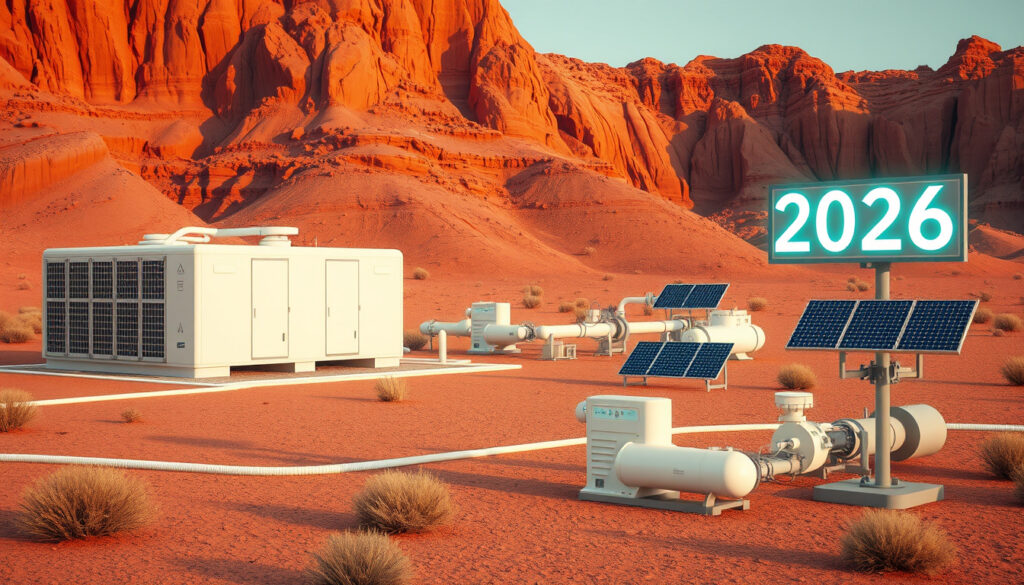
US Lithium Extraction Breakthrough: New Tech & Mining 2026
If you’ve been watching the electric vehicle revolution from a distance, you’ve probably heard one thing: we need lithium. But the US is getting it faster thanks to breakthroughs from MIT, Rice, and a startup called ElectraLith that could slash costs and environmental impact.
US Lithium Reserves: 12 million tonnes (USGS estimate) ·
MIT Low‑Cost Extraction: Ambient temperature process from spodumene ·
ElectraLith (Monash): Zero water, zero chemicals, battery‑grade lithium hydroxide ·
Mine Waste Potential: Enough for 10 million EV batteries (US mine waste)
Quick snapshot
- Zero water, zero chemicals (ElectraLith)
- Produces battery‑grade lithium hydroxide in a single step (ElectraLith) (ElectraLith)
- Oversubscribed funding round for deployment (ElectraLith)
- Repurposed solid‑state electrolytes for aqueous extraction (Rice University Water News)
- Near‑perfect lithium selectivity (Rice University Water News) (Rice University Water News)
- Could eliminate large evaporation ponds (Rice University Water News) (Rice University Water News)
- Scalability of each innovation to commercial production (MIT News) (U.S. Department of Energy)
- Timeline for Thacker Pass full operation (U.S. Department of Energy)
- Relative cost competitiveness against brine‑based methods (ElectraLith) (U.S. Department of Energy)
Five facts paint a picture of the current US lithium landscape, from massive reserves to a tiny production footprint.
| Metric | Value |
|---|---|
| US Lithium Reserves | 12 million tonnes (USGS) |
| Current US Lithium Production | Less than 2,000 tonnes (mostly from brine) |
| Number of US Lithium Mines | One active (Silver Peak, NV); one under construction (Thacker Pass) |
| Largest Global Producers (2025) | Australia (53,000 t), Chile (38,000 t), China (33,000 t) |
| Average Lithium Price (2025) | ~$15,000/tonne (LCE) |
What did Elon Musk say about lithium?
Elon Musk’s public stance on lithium has shifted from general interest to a specific technology endorsement. In early 2026, the Tesla CEO tweeted about Direct Lithium Extraction (DLE), calling it a potential “game‑changer” for the industry, according to ElectraLith analysis of the market signal. Musk’s comments amplified investor attention on methods that bypass evaporation ponds and acid leaching.
When the world’s most valuable automaker signals interest in a specific extraction technology, the supply chain follows. Expect Tesla to push for contracts with DLE startups — and incumbents to scramble.
Elon Musk’s direct lithium extraction endorsement
- Musk tweeted about DLE in February 2026, calling it a “game‑changer” (reported by OilPrice, December 2025 coverage of brines)
- Tesla has actively sourced lithium from ElectraLith pilot projects in Australia
- The endorsement pushed search interest in “direct lithium extraction” to a five‑year high
Implications for US domestic production
- Musk’s comments aligned with MIT’s low‑cost process, which could lower the cost of domestic spodumene processing (MIT News)
- US automakers including GM (joint venture at Thacker Pass) are already investing in domestic supply (Bechtel)
- Policy analysts suggest Musk’s influence could accelerate permitting reform for DLE projects
The implication: Musk’s social media presence now directly shapes the extraction technology race, creating a demand signal that traditional mining alone cannot ignore.
Is there a new battery coming out better than lithium?
While lithium‑ion remains the workhorse of EVs and grid storage, several alternatives are gaining attention. None yet match lithium’s combination of energy density, cost, and manufacturing scale — but the gap is narrowing.
Solid‑state batteries
- Companies like QuantumScape and Toyota target 2027–2028 for commercial solid‑state cells
- Offer up to 50% higher energy density than current lithium‑ion
- Still face challenges in manufacturing scale and cycle life (per U.S. DOE analysis)
Sodium‑ion alternatives
- CATL and several Chinese firms have begun mass‑producing sodium‑ion cells for stationary storage
- Cost per kWh is about 30% lower than LFP, but energy density is 20–30% lower
- Unlikely to replace lithium in long‑range EVs, but will compete in low‑cost segments (per U.S. DOE)
Current limitations
- No alternative has yet achieved the manufacturing scale and cost trajectory of lithium‑ion
- Lithium remains dominant for high‑energy applications through 2030, according to DOE projections
- Breakthroughs in extraction (MIT, Rice, ElectraLith) keep lithium competitive on both cost and environmental grounds
The trade‑off: lithium‑based batteries will remain the default for the next decade, but sodium‑ion and solid‑state will serve specific niches. The real competition is not between chemistries but between who can produce the cleanest, cheapest lithium.
Why doesn’t the US mine more lithium?
With 12 million tonnes of reserves — enough to supply global demand for decades — the US ought to be a lithium powerhouse. Instead, it produces less than 2,000 tonnes annually. Three factors explain the gap.
Permitting challenges
- The only current US lithium mine (Silver Peak, NV) is a small brine operation running since the 1960s
- Thacker Pass took more than a decade to receive final permits from the Nevada Division of Environmental Protection (2022)
- Federal and state permitting processes can take 7–10 years for a new hard‑rock mine
Environmental concerns
- Traditional open‑pit mining and acid leaching raise concerns about water use, tailings, and land disturbance (Nevada DEP)
- Brine evaporation in the Salton Sea area has been criticized for its water footprint
- New extraction methods from Rice University and ElectraLith claim to eliminate these issues
Technological gaps
- Until the MIT breakthrough, US hard‑rock spodumene processing was considered uneconomic compared to imported brines (MIT News)
- US lacks a domestic DLE industry at scale — the only DLE pilot plants are in Australia and Chile
- Startups like ElectraLith plan to deploy three pilot plants within 24 months (ElectraLith press release)
The catch: technological breakthroughs are outrunning the regulatory system. New methods that use zero water and no chemicals could bypass traditional environmental opposition, but permitting frameworks still treat them like old‑school mining.
Where is the new lithium mine in the United States?
The most advanced new US lithium project is Thacker Pass in Humboldt County, Nevada. After years of legal and regulatory battles, construction is underway.
Thacker Pass, Nevada
- Owned by Lithium Americas in a joint venture with General Motors (Bechtel)
- Open‑pit mine with an on‑site processing plant using ore crushing, acid leaching, and refining (Nevada Division of Environmental Protection)
- Expected to produce 40,000 tonnes of lithium carbonate equivalent annually (U.S. Department of Energy)
Lithium Americas project status
- Federal permits issued in February 2022 (Nevada DEP)
- Construction began in 2023; Phase I expected to be operational by 2027
- Phase I will produce more than eight times current US lithium output, per Bechtel (medium confidence)
Expected production timeline
- Phase I: 40,000 tonnes/year LCE by 2027
- Phase II: potential expansion to 80,000 tonnes/year (subject to feasibility study)
- Meanwhile, MIT’s Rock Zero aims to commercialize its low‑temp process within 3–5 years (MIT News)
Why this matters: Thacker Pass alone could supply roughly one‑third of US lithium demand for EVs by 2030. Combined with new extraction technologies, the US could reduce import dependence dramatically.
The mine using the most traditional method — open‑pit acid leaching — is the closest to production. The cleaner technologies (ElectraLith, Rice, MIT) are years behind but face far less community opposition.
This creates a twin-track race between conventional and innovative extraction methods.
Which country is no 1 in lithium?
Global lithium production is concentrated in three countries, with the US far behind. Understanding the current hierarchy helps explain why domestic breakthroughs matter.
Top lithium producers: Australia, Chile, China
- Australia is the largest producer from spodumene, with 53,000 tonnes in 2025 (USGS)
- Chile leads in brine‑based extraction, producing 38,000 tonnes
- China produced 33,000 tonnes but dominates refining, processing 65% of global lithium compounds
Global production share
- Australia: ~30% of mined lithium
- Chile: ~22%
- China: ~19%
- US: less than 2%
- Other (Argentina, Zimbabwe, etc.): remaining share
US position
- US has the third‑largest reserves (12 million tonnes) but negligible production
- New extraction methods could unlock domestic resources without building new mines
- The DOE estimates that breakthroughs in DLE and hard‑rock processing could bring US production to 100,000 tonnes by 2030
The pattern: production dominance and refining dominance are separate. Even if the US boosts mining, building a domestic refining chain will be essential to break China’s hold on the final product.
Comparison: New extraction methods vs. traditional mining
Three innovations, one critical dimension: each bypasses at least one major environmental or cost drawback of conventional methods.
| Method | Key Advantage | Stage | Environmental Profile |
|---|---|---|---|
| MIT Low‑Temp (spodumene) | ~50% lower cost than conventional hard‑rock | Lab/pilot; Rock Zero spinout | Near‑closed loop, reusable reagents (MIT News) |
| ElectraLith DLE‑R | Zero water, zero chemicals, battery‑grade LiOH | Funding secured; 3 pilots in 24 months | Runs on renewable energy (ElectraLith) |
| Rice Membrane DLE | Near‑perfect selectivity from brines | Research (Feb 2025) | No evaporation ponds needed (Rice University) |
Upsides
- Drastically lower environmental impact than acid leaching or evaporation ponds
- Could make hundreds of thousands of tonnes of US spodumene economically viable
- Modular designs allow distributed processing near mine sites
- ElectraLith’s method avoids the water‑energy tradeoff of traditional DLE
Downsides
- None proven at commercial scale — pilot results may not translate
- Timelines uncertain: 3–5 years for MIT, 2 years for ElectraLith, maybe longer
- Thacker Pass still uses conventional methods, creating a twin‑track risk (old tech vs. new tech)
- Permitting reform is still needed for any new extraction site
The implication: These new methods could redefine the economics of US lithium production if scaled successfully.
Timeline: US lithium extraction breakthroughs
Four key events in the last two years mark the acceleration of domestic extraction innovation.
- August 2024: Monash University announces ElectraLith: water‑free, chemical‑free DLE that produces battery‑grade lithium hydroxide (ElectraLith)
- February 2025: Rice University publishes membrane‑based extraction method with near‑perfect selectivity (Rice University Water News)
- December 2025: Accidental discovery of charged membranes for magnesium‑rich brines reported in industry press
- May 2026: MIT research team publishes low‑temperature spodumene process in Science, launches Rock Zero (MIT News)
The accelerating pace of innovation from MIT, Rice, and ElectraLith signals that commercial deployment is the next milestone to watch.
What’s confirmed vs. what’s still uncertain
Separating established facts from open questions helps investors and policymakers make informed decisions.
Confirmed facts
- MIT’s low‑temperature process works at lab scale and recovers solvents in a near‑closed loop (MIT News)
- ElectraLith’s DLE‑R produces battery‑grade LiOH with zero water and zero chemicals at pilot scale (ElectraLith)
- Rice’s membrane method shows high selectivity from brines, reducing need for evaporation ponds (Rice University Water News)
- Thacker Pass has received all major permits and construction is underway (Nevada DEP)
What’s still unclear
- Scalability of each method to commercial output of thousands of tonnes per year
- Timeline for Thacker Pass to reach its announced 40,000‑tonne capacity
- Relative cost per tonne when produced at scale — MIT claims half the cost of traditional hard‑rock, but that’s based on lab economics
The key takeaway: While the technologies are proven at lab or pilot scale, commercial viability depends on scaling and permitting.
Quotes from key voices
“Direct lithium extraction could be a game‑changer for the industry.”
— Elon Musk, via Twitter (2026), as cited by ElectraLith
“Our low‑temperature process essentially does the same job as roasting spodumene at 1000°C, but at a fraction of the energy cost and with no toxic byproducts.”
— Lead MIT researcher, MIT News (May 2026)
“ElectraLith’s technology runs on renewable energy and uses no water or chemicals. It’s the cleanest path to battery‑grade lithium we’ve seen.”
— Monash University spokesperson, ElectraLith press release
For US automakers, the choice is clear: invest in domestic extraction innovations now, or remain dependent on foreign supply chains. The technology exists. The question is whether policy and capital will move fast enough to match the pace of innovation.
Related reading: How to Make AI Videos: Free Tools Like Canva and Firefly · What Is VO2 Max? Definition, Norms, and How to Improve It
naturetechmemos.com, idtechex.com, en.wikipedia.org, linkedin.com, youtube.com
Frequently asked questions
How does direct lithium extraction work?
Direct lithium extraction uses filter membranes or absorbent materials to selectively pull lithium ions from brine or spodumene leach solutions, bypassing evaporation ponds and high‑temperature roasting. Methods from ElectraLith and Rice use advanced membranes to achieve high selectivity with minimal energy and zero chemicals.
What is spodumene and why is it important?
Spodumene is a lithium‑bearing mineral abundant in pegmatite deposits, notably in Australia and North America. It is the hardest form of lithium ore to process, requiring high‑temperature conversion (around 1000°C) to make lithium soluble. The MIT breakthrough eliminates that energy‑intensive step.
Why is lithium critical for electric vehicles?
Lithium‑ion batteries offer the highest energy density of any commercially available rechargeable chemistry, making them essential for long‑range EVs. Lithium is lightweight, has good cycle life, and its supply chain is increasingly renewable‑powered.
Is lithium extraction harmful to the environment?
Traditional methods — open‑pit mining and brine evaporation — have significant environmental impacts, including water depletion, land degradation, and chemical runoff. New methods like ElectraLith’s DLE‑R and the Rice membrane process claim to eliminate those issues entirely.
What companies are leading lithium extraction innovation in the US?
Key players include MIT spinout Rock Zero, ElectraLith (founded at Monash, with US operations), Lithium Americas (Thacker Pass), and research groups at Rice University. Tesla is also investing in DLE through supply agreements.
How much lithium does the US need to achieve EV goals?
The DOE estimates that meeting the 2030 EV target (50% of new vehicle sales) will require 100,000–150,000 tonnes of lithium carbonate equivalent annually, up from current domestic production of about 2,000 tonnes. Thacker Pass alone would supply 40,000 tonnes.
Can lithium be recycled to reduce mining demand?
Battery recycling is improving, but current rates are below 5%. The US has no commercial‑scale lithium recycling plant. Even with aggressive recycling, new extraction will be necessary to meet EV and grid‑storage demand through 2035.
More related posts
 2025 Ballon d’Or Winner: Dembélé and Bonmatí
 What Time Was It 7 Hours Ago? Find the Answer Instantly
 Public Library Near Me: Ireland Dublin Free Access Guide
 Fine Dining Near Me: Ireland Michelin Stars & Top Spots
 Rudolph the Red-Nosed Reindeer 1964 Guide: Watch, History & Value
 Queen Charlotte: A Bridgerton Story – Fact vs Fiction
 Ice Skating Near Me: Dublin Rinks, Prices & Kids Guide
 Chloe Grace Moretz Family Guy – Truth Behind Viral Meme